For several reasons, Show Boat, which opened on December 27, 1927, and ran for over a year and a half to capacity houses, was a groundbreaking Broadway musical. In 150 Years of Popular Musical Theatre, author Andrew Lamb says, “Not the least significant aspect of mid-1920s musicals such as [Jerome] Kern’s Sunny was the way the score incorporated incidental music, underscoring, melodrama, and reprises that kept the piece flowing from scene to scene. This was a particular feature of Kern’s scores, and it reached its apogee in a collaboration with Oscar Hammerstein that became one of the great milestones of the American theatre. Show Boat brilliantly integrated vernacular song and dance, as well as anticipating film techniques in its use of underscoring of dialogue.”
|
|
The play was based on a 1926 Edna Ferber novel about a show-business family that lives and performs aboard a Mississippi river boat. The show’s leading lady, Julie played by Helen Morgan, is forced by authorities to leave the river boat when it is discovered that she is part Negro and married to a white man (Steve), the male lead in the show. The ship’s captain hires a handsome riverboat gambler named Gaylord (played by Howard Marsh) to replace Steve, whose leading lady is now the captain’s daughter Magnolia, played by Norma Terriss. They fall in love, and to the disappointment of her parents she marries Gaylord and they leave the show. Gaylord, shamed by his gambling debts, ultimately leaves Magnolia who, to support herself and her daughter, goes onto a successful stage career.
Other popular songs introduced in the show include “Make Believe,” “Can’t Help Lovin’ Dat Man,” “Why Do I Love You,” and the comedic “Life upon the Wicked Stage.” “Bill,” a song written by Kern and P.G. Wodehouse in 1918, was reworked by Hammerstein and interpolated into the show.
The show tackled the serious issue of racism, and it should be remembered that at that time abolition was only a generation old. One of the hit songs, “Ol’ Man River,” was sung by a black stevedore who bemoans the hardships of his life. Lamb describes it as a “song whose like had not previously been heard in a Broadway show.” Says Lamb, “‘Ol’ Man River’ was written for Paul Robeson, who later made it his own, but, owing to delays in production, it was introduced by Jules Bledsoe.” Robeson later played the role of Joe in a 1928 London production, in the 1936 film version (which starred Irene Dunne and Alan Jones), and in two of the many revivals of the show, one in New York (1932) and one in Los Angeles (1940). Over the years Show Boat has enjoyed many stage revivals around the world, the most recent being at London’s Royal Albert Hall in 2006.
Show Boat was first filmed in 1929 as a silent movie which more closely followed Ferber’s book than the stage show. Before its release some scenes were reshot to include songs, and music was added as a prologue to the film. Stepin Fetchit (the stage name of Lincoln Theodore Monroe Andrew Perry) played Joe, who sang not “Ol’ Man River” but a new song added to the film, “The Lonesome Road.” His voice was dubbed by Jules Bledsoe who sang “Ol’ Man River” in the musical prologue added to the film.
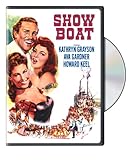
Show Boat appeared as a vignette in Till the Clouds Roll By, the 1946 musical film biography of Jerome Kern in which Caleb Peterson sang “Ol’ Man River,” reprised by Frank Sinatra at the end of the film. In 1951 Show Boat became a Technicolor spectacular starring Kathryn Grayson, Howard Keel, and Ava Gardner as Julie. “Ol’ Man River” was sung by William Warfield, and the movie was nominated for two Oscars: Best Music, Scoring of a Musical Picture and Best Cinematography.
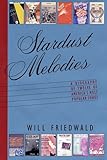
In his book Stardust Melodies: A Biography of Twelve of America’s Most Popular Songs, Will Friedwald devotes a chapter to “Ol’ Man River” and tells of the origin of the song. “The score and the book were almost finished when Hammerstein happened to be pondering the way in which Edna Ferber had used the Mississippi River in [her] book....In the novel, the river was practically a character in and of itself; it’s a unifying force that binds all the characters together, dictates their relationships, and determines the course of all their lives. ...Hammerstein wanted to capture that spirit of the river in song....” Kern was busy when Hammerstein approached him, but the lyricist came up with the idea of developing a banjo strain from the song that introduced the show boat in the musical. “By the time the two men were finished, the song indeed ran through the entire production much the way that Ol’ Man Mississippi chugs it way through the South.”
Edna Ferber wrote in her autobiography, A Peculiar Treasure, of the powerful effect that the song had on her when Kern first played and sang it for her. “I give you my word my hair stood on end, the tears came to my eyes...,” and throughout her life she was emotionally moved by the song.
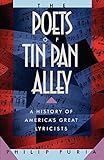
In The Poets of Tin Pan Alley: A History of America’s Great Lyricists Philip Furia says, “The great hit from Show Boat, of course, was ‘Ol’ Man River,’ a thoroughly theatrical song that nevertheless managed to become independently popular even though it is so clearly tied to a specific character and dramatic situation.”
Furia goes on to examine the lyrics of the song in detail, saying that the song “...illustrates Hammerstein’s principle that ‘rhyme should be unassertive,’” the danger being that the listener’s attention can “‘be diverted from the story of the song.’” Furia points to Hammerstein’s “...use of repetition and parallel phrasing...and his manipulation of verbs...to reflect the thematic tension in the song between the singer’s physical power and social powerlessness, a tension contrasted, in turn, to the river’s power in repose. The verse contrasts two simple verbs--the blacks ‘work’ while the ‘white folk play’--then further describes the working blacks in participles, ‘Pullin’ does boats...gittin’ no rest...’ then in imperatives:
Don’t look up and don’t look down,
You don’t dast make de white boss frown;
Bend your knees an’ bow yo’ head,
An’ pull dat rope until yo’re dead.
“In the chorus--surprisingly a standard Alley thirty-two-bar AABA chorus--Hammerstein turns away from the frenetic world of blacks and whites to the river itself. Along with the shift away from rhyme, the verbs that characterize the river are calm.... When the lyric shifts back to the human world, strong verbs and sharp rhymes return.”
In Alec Wilder’s American Popular Song: The Great Innovators, 1900-1950 the author says, “‘Ol’ Man River’ is not a complex song, melodically or harmonically. Its principal characteristics are the rhythmic devices of the second half of each measure (except in the release), and the extremely high ending. Undoubtedly the lyric accounts for half of the song’s acceptance though it is frowned on by the society of the seventies.”
Friedwalder points out that while most popular songs can be performed in many different ways, “Ol’ Man River” is rendered either as an anthem or as “an up-tempo killer-diller.” Paul Whiteman presented it twice in 1928, first as an up-tempo fox trot with vocalist Bing Crosby and then as semi-serious concert music.
After its early popularity, interest in the song waned until the 1932 revival of the show. According to Friedwalder, it was the 1933 recording by Horace Henderson (using some high-profile musicians from his brother Fletcher’s band) that renewed interest in the tune. “Obviously, the piece’s diatonic, scalelike melody appealed to jazzmen, who for a few years made it virtually their favorite jam number after ‘I Got Rhythm.’” Friedwalder points out a variety of recordings of the song; trumpeter Cootie Williams (1938), Harry James with vocalist Dick Haymes (1941), a doo-wop version by the Ravens (1947), Duke Ellington with vocalist Al Hibbler (1951), jazz pianist Oscar Peterson (1959), the great Ray Charles, and country guitarist Chet Atkins. He credits Frank Sinatra, though, as reclaiming it as a serious piece of music.
Luis Russell’s band featured trumpeter Rex Stewart on a 1934 recording. More contemporary artists who recorded the song include saxophonists Art Pepper and George Adams; pianist Dave Brubeck; and vocalist Rosemary Clooney. In the ‘90s “Ol’ Man River” was recorded by vibist Peter Appleyard; the two pianos of Dick Hyman and Ralph Sutton; guitarists Martin Taylor and Mundell Lowe; and pianist Adam Makowicz. Although vocalist Ernie Andrews recorded it in 2001, the song appears to be undergoing a slump among jazz musicians of the 21st century.
|