|
|
|
| “’The Song is You’ has been cited as a masterpiece of theater songwriting because it combines a romantic mood with a comic one.” |
|
 |
|
- Hugh Fordin
|
|
| |
This Jerome Kern-Oscar Hammerstein II piece was introduced by Tulio Carminati and Natalie Hall in the Broadway musical Music in the Air. The show premiered at the Alvin Theater on November 8, 1932, and closed on September 16, 1933, after 342 performances. Bandleader Jack Denney’s 1932 Victor recording, backed with “I’ve Told Every Little Star” from the same show, rolled into the hit parade in 1933 and rose to #12.
|
|
| |
|
| |
|
Music in the Air opened to positive reviews. Gerald Bordman’s biography, Jerome Kern: His Life and Music, quotes John Mason Brown of the Evening Post: “Kern’s entrancing score...abounds in the sort of soft, insinuating melodies which are rarely heard along Broadway and of which Mr. Kern is past master.”
|
| |
| |
|
| |
|
|
| |
| |
|
| |
|
According to Hugh Fordin’s biography, Getting to Know Him: A Biography of Oscar Hammerstein II, “The Song Is You” was one of Kern’s favorite melodies. As soon as he completed the song he phoned Hammerstein to play it for him. Fordin continues, “’The Song is You’ has been cited as a masterpiece of theater songwriting because it combines a romantic mood with a comic one.”
Alec Wilder, in his book American Popular Song: The Innovators 1900-1950, at first assesses the piece as “one of Kern’s self-consciously elegant ‘art songs’” but tempers that by praise saying, “By no means am I denying its innate presence and superior quality as a piece of writing. It moves gracefully, and the release is masterful. Up to the release there is no particular harmonic interest, but in the release both the harmony and the melody are brilliant. It is clear that the melody in this section is conditioned by the harmony and truly needs its support.”
A film adaptation of Music in the Air was released in 1934 with vocalist John Boles singing “The Song is You.” Aside from a few recordings made during the period 1932-1934, the tune disappeared until 1945 when several big bands began playing it, most notably Glenn Miller, Tommy Dorsey and Claude Thornhill. It’s certain that the song’s revival was due to the exposure by these groups.
|
|
|
|
| This section suggests definitive or otherwise significant recordings that will help jazz students get acquainted with
“The Song Is You.” These recordings have been selected from the Jazz History and
CD Recommendations sections.
|
“The Song Is You” as a jazz vehicle is epitomized by Charlie Parker’s burning 1952 performance (Essential), with great supporting work by Hank Jones and Max Roach. Wynton Marsalis, in his 1986 recording (Marsalis Standard Time ~ Vol.1), offers up a creative interpretation that has been influential on younger generations of jazz musicians. Nancy Wilson’s 1963 recording with Gerald Wilson’s Orchestra (The Great American Songbook) is a great starting point for learning the lyrics and is well worth a listen anyway.
Noah Baerman - Jazz Pianist and Educator
|
The lyrics are sung in the show by a character who is a composer, and he’s obviously finding inspiration when gazing on his love. “The music is sweet, the words are true, ‘The Song Is You.’” Chris Tyle
Musical analysis of “The Song Is You” | | Original Key | C major; false key change to E major during “B” | | Form | A1 - A2 - B - A3 | | Tonality | Major throughout | | Movement | “A” is primarily step-wise descending; “B” contains a series of lyrical upward leaps followed by stepwise descents | Comments (assumed background) | | The potential monotony of repeated notes in “A” is relieved by embellishing tones and use of both common-tone and leading diminished seventh chords. The melodic contour and harmonic changes in “B” offer an almost spectacular contrast to “A,” with leaping, lyrical intervals and an unusual chord progression. Suddenly shifting from the tonic of C major to E major, it continues in this key for three measures. As the melody note lands on the major seventh, it becomes the common-tone of the following Eb (D#) chord, the V7 of yet another new key, G# minor. It starts going through the cycle of fifths, getting as far as B7. Here the melody note is on the root tone of the “chord of the moment,” which happens to be the initial melody note of “A” (the major seventh over the Cma7 chord). This makes for a smooth transition between two distant keys that, while unusual and exotic, is not jarring to the ear. | | K. J. McElrath - Musicologist for JazzStandards.com |
|
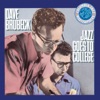
Indie record label Roost hired a young but seasoned tenor saxophonist named Stan Getz in 1950, and he would be onboard with the label for the next two years. A three-CD set of Getz’s Roost recordings features two impressive versions from 1951 of “The Song Is You.” The first is a studio recording which elegantly drives along with Getz in top form, and the second, a much longer, live recording, is even more impressive. Charlie Parker’s 1952 version finds the brilliant alto saxophonist flying at a tempo similar to Getz’s version but in a distinctly different improvisational texture. Paul Desmond, an alto saxophonist whose eloquent approach was more akin to Getz’s than Parker’s, is featured in a stunning performance from a live 1953 recording with pianist Dave Brubeck’s Quartet. Their performance is part of the marvelous, much-acclaimed, and brilliantly recorded Jazz Goes to College album.
Chris Tyle - Jazz Musician and Historian
 Charlie Parker
Essential
Polygram Records 517173
Compilation
|
|
|
|
|
Additional information for "The Song Is You" may be found in:
|
|
|
 Robert Gottlieb, Robert Kimball
Reading Lyrics
Pantheon
Hardcover: 736 pages
(Includes the following types of information: song lyrics.)
|
|
|
|
|
| This section shows the jazz standards written by the same writing team. |
|
|
|
|
Comment Policy
- Your comments are welcome, including why you like
this tune, any musical challenges it presents, or additional background information.
- Jazz musicians, fans, and students of all ages use this website as an educational resource.
As such, off-topic, off-color, unduly negative, and patently promotional comments will be removed.
- Once submitted, all comments become property of JazzStandards.com.
By posting, you give JazzStandards.com permission to republish or otherwise distribute your comments in any format or other medium.
JazzStandards.com reserves the right to edit or remove any comments at its sole discretion.
|
|
| Click on any CD for more details at Amazon.com |
 Benny Carter
Cosmopolite: The Oscar Peterson Verve Sessions
Polygram Records
|
|
This excellent performance by saxophonist Carter also features a great Bill Harris trombone solo and some intensely swinging work by Oscar Peterson’s trio plus Buddy Rich on drums.
|
 Jimmy Giuffre
Jimmy Giuffre 3
Atlantic UK
|
|
In his influential drummer-less trio with guitarist Jim Hall, Giuffre provides a clever arrangement that nonetheless leaves the melody intact. His playing on tenor saxophone is fluid and creative.
|
 Nancy Wilson
The Great American Songbook
Blue Note Records
Original recording 1963
|
|
Wilson’s interpretation of “The Song Is You” is melodically straightforward but virtually oozes personality. Gerald Wilson’s Orchestra provides a swinging up-tempo backing, along with some great trumpet work by Carmell Jones.
|
 Keith Jarrett Trio with Gary Peacock and Jack De Johnette
Still Live
Ecm Records
Original recording 1986
|
|
“The Song Is You” takes on epic proportions on this lengthy, up-tempo performance. Pianist Jarrett’s virtuosity and inventiveness are on full display, as is his symbiotic relationship with bassist Gary Peacock and drummer Jack DeJohnette.
|
 Wynton Marsalis
Marsalis Standard Time ~ Vol.1
Sony
Original recording 1986
|
|
Marsalis is perhaps best known for his trumpet playing and composing in a neo-traditionalist context, but his mid-1980s ensemble was influential in its use of modern polyrhythmic techniques. This performance of “The Song Is You” is one of the most important examples of that.
|
|
 Art Blakey
Jazz Message
Polygram Int'l
|
|
Drummer Blakey leads a stellar group through an upbeat, joyous rendition of the song. All four seem to be having the time of their lives, and saxophonist Sonny Stitt ups the ante by blowing fast and loose.
|
 Teri Thornton
Devil May Care
1999 Original Jazz Recordings 1017
Original recording 1961
|
|
On her debut recording Thornton delivers a knockout punch with this energetic reading. Her voice soars to the heavens on this swinger that features pianist Wynton Kelly and a horn section that includes trumpeter Clark Terry.
|
 Lee Konitz/Brad Mehldau/Charlie Haden
Alone Together
1997 Blue Note 57150
Original recording 1997
|
|
Three of the most innovative jazz minds join together for this exquisite live recording. The inspirational energy crackles off the disc as saxophonist Konitz, pianist Mehldau, and bassist Haden simultaneously depart on lofty flights of improvisation.
|
 Walter Norris
Live at Maybeck Recital Hall Vol. 4
1990 Concord Records 4425
|
|
Norris is one of the world’s leading pianists both technically and creatively. His 8-plus-minute investigation of “The Song Is You” is a case in point. As he says, he lets the melody “kinda creep out at you.”
|
|
|
|