|
|
|
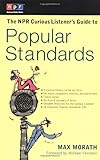
| “…the most perfectly constructed of all popular standards....” |
|
 |
|
- William Zinsser
|
|
| |
Cast members Hiram Sherman, Frances Mercer, Hollace Shaw, and Ralph Stewart introduced “All the Things You Are” in Jerome Kern’s last Broadway musical, Very Warm for May, which opened November 17, 1939, and closed after only 59 performances. As a result of horrible reviews, the Alvin Theater was almost empty on the second night. But from this failure emerged what many regard as Kern’s finest composition.
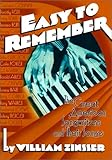
A romantic, warm-hearted song, “All the Things You Are” is a combination of harmonious lyrics and lush, intricate music. In Easy to Remember: The Great American Songwriters and Their Songs, William Zinsser calls it “...the most perfectly constructed of all popular standards” and further says, “Kern effortlessly moves his Bach-like tune through five keys in 32 bars-the textbook illustration of how songwriters achieve freshness within the form’s tight limits.” See the visitor’s comment, below.*
The song’s success was surprising, because it was unusual for its time. Kern wrote it to satisfy his own creative urge and felt it was far too complex for popular appeal; and Hammerstein’s lyrics were modest and sentimental, when the work of other top lyricists was clever, bright, and witty.
|
| |
| |
|
| |
|
|
| |
| |
|
| |
|
But apparently the public was not put off by the complexity or sentimentality, as evidenced by its appearance on the pop charts for 13 weeks (beginning in 1939) with the Tommy Dorsey Band peaking at the number one position. In 1940 it charted with Artie Shaw and His Orchestra (Helen Forrest, vocal), rising to number eight, and with Frankie Masters and His Orchestra (Harlan Rogers, vocal), rising to number fourteen.
|
|
| |
|
| |
|
As an interesting alternative to Oscar Hammerstein’s romantic lyrics, the well-known and much-recorded jazz bassist Red Mitchell wrote an alternate set of lyrics to “All the Things You Are” which are published as a poem titled “You Are” in the 1999 book Keith “Red” Mitchell: Selected Poems 1968-1992.
You are your greatest composition
The one folks hear
When they hear your name
You are your spirit’s own physician
The one who heals yourself
As a daily game
You can’t create yourself
That job’s been done
You can compose yourself
It’s kind of fun...
You are the people you have turned to
And you are the one who does what you do
Your major work of art is you Reprinted with permission from Red Inc Music Co.
In 1943, MGM produced Broadway Rhythm, a Technicolor musical inspired by Very Warm for May, which retained only “All the Things You Are” from the original score, this time sung by Ginny Simms. The film is overblown and poorly crafted. Film critic Steve H. Scheuer calls it a “lavish piece of nothing,” and James Agee agrees, stating, “it contains perhaps three minutes of good acrobatic dancing and lasts nearly two hours.”
|
| |
| |
|
| |
*Visitor’s comment
One of our visitors sent the following to us by email: “The tune would only sound like one of Bach’s compositions if the melody was a Bach type. It’s not. It’s true that the chord progression of this tune gives a beautiful example of western classical harmonic progression. A student can learn a great deal of knowledge about harmonic progression (e.g., VIm7 => IIm7 => V7 => Imaj7 => IVmaj7 in the first five bars, etc. And it is also true that this type of progression was already in use in Bach’s time. But this does not mean that you find a Bach style of melody and counterpoint in this tune, unless you make it yourself (as own inventions, which is done very often. Also, the tune does not have 32 bars, but 36 bars.”
K.J. McElrath’s response to the visitor: The writer of your e-mail is absolutely correct in his/her assessment of Zinsser’s commentary. Melodically, this piece has more in common with German Romanticism (Strauss, Brahms, Wagner, et. al.) than the Baroque style of Bach and Telemann. The type of chord progression (I would analyze it more as f min: i - iv[ii7/I in the new relative major key] - Ab maj: V7 - I - IV, but its a subjective thing - I hear it in f minor, whereas he may hear Ab major as the tonic key) was indeed in use during the Baroque period, however. If Bach had written a melody like this, chances are it would have been a “cantus firmus” in the bass with ornate counterpoint in the upper voices. The song does actually lend itself to Baroque-type counterpoint quite well. However, Zinsser is correct in that this piece does shift tonal centers quite frequently (one of the challenges in analyzing this piece). And yes, this tune indeed contains an extra four measures. Because of its construction, this tends to go unnoticed.
|
|
|
|
More information on this tune... |
|
See the Reading and Research page for this tune for additional references. |
|
- Jeremy Wilson
|
|
| This section suggests definitive or otherwise significant recordings that will help jazz students get acquainted with
“All the Things You Are.” These recordings have been selected from the Jazz History and
CD Recommendations sections.
|
“All the Things You Are” and its chord progression became essential to the bebop movement, so it is not surprising to find definitive recordings of the tune coming from the giants of bop. The famous Massey Hall concert of 1953 ( Jazz at Massey Hall) produced a classic version featuring Charlie Parker, Dizzy Gillespie, Bud Powell, Charles Mingus and Max Roach. Meanwhile, another classic version comes from Thelonious Monk’s collaboration with Milt Jackson and the bop vocalist Kenny “Pancho” Hagood ( Wizard of the Vibes).
Noah Baerman - Jazz Pianist and Educator
|
|
Musical analysis
of “All the Things You Are”
|
|
Original Key |
Written
in four flats. Begins in F minor;
modulates to C major, G major and
E major before returning to F minor.
Ends in Ab major. |
|
Form |
A1
– A2 – B1 – B2- A1 – C |
|
Tonality |
Alternates
between minor and major |
|
Movement |
Primarily
leaps. “A” sections consist of a
motif consisting of a fourth up
and a fifth down. In “B” and “C”,
the leaps are even wider, up to
a minor seventh. What step-wise
movement exists is mostly embellishing
tones (neighbor tones, appogiatura,
etc.) |
|
Comments
(assumed
background)
|
|
This is a deceptively simple composition
showing strong Romantic/Impressionist
influences. The harmonic progression
in the first five measures is identical
to that of (the latter written)
“Fly Me To The Moon.” However, where
the latter piece returns to its
initial key by way of a viiø7 going
to V7, this one uses the clever
device of a “common-tone” chord
to modulate to an entirely new key
and then goes on to do this three
more times. The best example of
this is at the end of “B2”. The
melody lands on G#, the third of
the underlying chord of E. Then,
by moving one note of the chord
– B to C – it becomes a pivotal
C+, allowing for an easy return
to F minor. Because of its “pan-tonal”
nature, many inexperienced performers
are intimidated by this piece in
the beginning. As always, the melody
should be learned “as is” before
attempting improvisation. Keeping
in mind that both “A’s” and both
“B’s” are built on the same patterns
in different keys will make mastery
of this piece easier. Also realize
that the common tone of the modulation
is actually in the melody the first
four times. |
|
K. J. McElrath - Musicologist for JazzStandards.com |
|
According to jazz
critic Gary Giddins, in his Village Voice
article "Jazz Makes Peace
with Jerome Kern," Charlie Parker
secured the place of “All the Things You
Are” as a jazz standard in 1947 with his
knockoff, “Bird of Paradise.” Giddins says,
…from the moment he
intoned the dramatic intro, his vamp
and Kern’s harmonic plateau were mated
forever … his recording showed that
a harmonic sequence can so vividly support
a melody that the mind’s ear registers
the theme even when the musician spins
nothing but variations.
- JW
Although this tune was frequently recorded
in the late 1930s and early 1940s by a number
of big bands (most notably Artie Shaw’s
band), it’s the 1940 recording by remarkable
pianist Art Tatum that stands out, not only
for his virtuosity but also for his influence
on other musicians, especially Charlie Parker.
Tenor saxophonist Coleman Hawkins was,
along with Tatum and Artie Shaw, among the
first jazz musicians to recognize and record
many tunes that have become standards. A
fixture on New York’s 52nd Street in the
1940s, Hawkins recorded a memorable version
of “All the Things You Are” in 1944. That
same year pianist
Erroll Garner, in one of his first recording
sessions, cut a double-sided 78 version
of the tune.
Chris Tyle - Jazz Musician and Historian
|
Additional information for "All the Things You Are" may be found in:
|
|
|
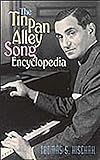 Thomas S. Hischak
The Tin Pan Alley Song Encyclopedia
Greenwood Press
Hardcover: 552 pages
(1 paragraph including the following types of information: Broadway productions, history, lyric analysis, music analysis and performers.)
|
|
|
|
|
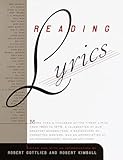 Robert Gottlieb, Robert Kimball
Reading Lyrics
Pantheon
Hardcover: 736 pages
(Includes the following types of information: song lyrics.)
|
|
|
|
|
 Gerald Mast
Can't Help Singin'
Overlook Press; Rei edition
Paperback: 400 pages
(2 pages including the following types of information: music analysis.)
|
|
|
|
|
“All the Things You Are” was included in these films:
-
Broadway Rhythm (1944,
Ginny Simms)
-
Till the Clouds Roll By (1946,
Tony Martin)
-
Because You’re Mine (1952, Mario
Lanza)
-
Fallen Angels (1998, Chet Baker)
|
| This section shows the jazz standards written by the same writing team. |
|
|
|
|
Comment Policy
- Your comments are welcome, including why you like
this tune, any musical challenges it presents, or additional background information.
- Jazz musicians, fans, and students of all ages use this website as an educational resource.
As such, off-topic, off-color, unduly negative, and patently promotional comments will be removed.
- Once submitted, all comments become property of JazzStandards.com.
By posting, you give JazzStandards.com permission to republish or otherwise distribute your comments in any format or other medium.
JazzStandards.com reserves the right to edit or remove any comments at its sole discretion.
|
|
| Click on any CD for more details at Amazon.com |
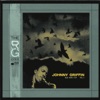
 Johnny Griffin
A Blowin' Session
1999 Blue Note 99009
Original recording 1957
|
|
Griffin more than holds his own in a high-energy cutting contest featuring fellow tenor saxophonists John Coltrane and Hank Mobley as well as a teenaged Lee Morgan on trumpet.
|
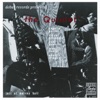
 Quintet, Charlie Parker, Dizzy Gillespie, Bud Powell, Max Roach
Jazz at Massey Hall
Ojc
|
|
Sparks fly and listeners receive a lesson in bebop soloing on this live recording by Parker, Dizzy Gillespie, Bud Powell, Charles Mingus and Max Roach.
|
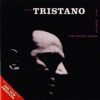
 Lennie Tristano
Lennie Tristano/The New Lennie Tristano
1994, Rhino 71595
Original recording, 1955, Atlantic
|
|
Tristano offers a straightforward, swinging version of this tune featuring the saxophone of Lee Konitz.
|
 Sonny Rollins
Night at the Village Vanguard
Blue Note Records
Original Recording 1957
|
|
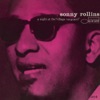
Rollins, in a trio with Wilbur Ware and Elvin Jones, gives us an exploratory and fiery “All the Things You Are.” In 1963 he would revisit the tune in collaboration with his hero, Coleman Hawkins.
|
|
 Andy Bey
Ain't Necessarily So
12th Street Records
|
|
Pianist/vocalist Bey was a cult figure until his 1996 release Ballads, Blues & Bey awakened the jazz world to his enormous talents. This 2007 release is from live performances at New York’s Birdland in 1997. His uptempo, freewheeling interpretation of “All the Things You Are” with his trio of Washingtons--Peter on bass and Kenny on drums--brings the song into the 21st century and proves that a great song, regardless of its age, provides the basis for endless inspiration.
|
|
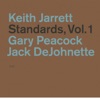
 Keith Jarrett
Standards Vol.1
2000, ECM Records
Original recording, 1983
|
|
Eclectic pianist Jarrett, bassist Gary Peacock, and drummer Jack DeJohnette are astounding individually and as a trio as they swoop and weave around each other while continuing to maintain the thread.
|
 Jimmy Heath Quintet
On the Trail
1995, Original Jazz Classics 1854
Original recording, 1964
|
|
Tenor sax man Heath delivers a great, straight-ahead jazz reading of the song that the Penguin Guide to Jazz on CD says “has some moments of spectacular beauty.”’
|
 Gonzalo Rubalcaba
Discovery
1990, Blue Note 95478
|
|
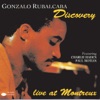
Rubalcaba, the pianist’s pianist and a native of Cuba, gives “All the Things You Are” a uniquely contemporary reading with bassist Charlie Haden and drummer Paul Motian.
|
|
|
|