|
|
|
| “Astaire’s dancing sequence with the song ‘Nice Work if You Can Get It,’ is executed by him dancing and playing around a drum set, a marvelous routine that got rave reviews and is still a high point of the film.” |
|
 |
|
- Chris Tyle
|
|
| |
Multi-talented actor/dancer/vocalist Fred Astaire introduced this Gershwin number in the 1937 film, A Damsel in Distress. Astaire’s recording, accompanied by the orchestra of Ray Noble (who had a part in the film), rose to first place on the charts the following year:
- Shep Fields and His Rippling Rhythm (1937, #8)
- Teddy Wilson and His Orchestra (1937, Billie Holiday, vocal, #20)
- Fred Astaire (1938, vocal, #1)
- Maxine Sullivan (1938, vocal, #10)
- Andrew Sisters (1939, vocal, #12)
|
|
| |
|
| |
|
|
| |
| |
|
| |
|
A Damsel in Distress, with a screenplay by noted author and playwright P.G. Wodehouse, was Fred Astaire’s eighth musical for RKO pictures and his third without dancing partner Ginger Rogers. In addition to Astaire, the film included Joan Fontaine as English aristocrat Lady Alyce Marshmorton and the husband-wife comedy team of George Burns and Gracie Allen. Predictably, Rogers’ absence hurt the film immeasurably (both financially and critically), since Fontaine, although born in England and right for the part, was unable to sing, and her dancing in the film is nothing special. One sequence in the picture features Astaire and Allen dancing a routine made famous by Astaire and his sister Adele, and although it is competent and amusing, it was certainly a let down for those expecting the terpsichorean magic of Rogers and Astaire.
|
| |
| |
|
| |
|
|
| |
| |
|
| |
|
Undoubtedly the highpoints of the film are the brilliant songs by George and Ira Gershwin and the singing and dancing of Astaire. Long-time Astaire choreographer Hermes Pan won an Oscar for the routine on the number “Stiff Upper Lip,” the feature dance by Astaire and Allen. Astaire’s dancing sequence with the song “Nice Work if You Can Get It,” is executed by him dancing and playing around a drum set, a marvelous routine that got rave reviews and is still a high point of the film.
A Damsel in Distress was the second RKO/Astaire picture with music by the Gershwin brothers. “Nice Work” was one of the first tunes completed for the film; in fact it had been, in songwriter’s parlance, a “trunk” song--a piece of music written and then filed away for future use. Its first incarnation was a nine-bar phrase written in 1930 with the tentative title of “There’s No Stopping Me Now.” The team had begun writing the music in early 1937 and finished May 12, submitting nine songs, one of which, “Pay Some Attention to Me,” was not used in the film.
Almost immediately the songwriters began work on their next film, The Goldwyn Follies. Although the team was to complete three songs for the film, it was during this period that George began exhibiting symptoms of the brain tumor that would end his short but brilliant career. Initially doctors felt his symptoms were due more to overwork and stress than to something physical, but by early July his condition had worsened. He lapsed into a coma and had emergency surgery to remove the tumor, but it was to no avail, and he expired on July 11, 1937, just 38 years old. George never saw the finished version of A Damsel in Distress.
Two more of Astaire’s numbers made the hit parade during 1938, including the flip side of “Nice Work,” “Things are Looking Up,” and what many consider the best number from the film, “A Foggy Day,” which the Gershwins completed in less than an hour.
The term “nice work if you can get it” was a popular phrase in England, and undoubtedly Ira Gershwin felt it an appropriate tune title considering the English setting of A Damsel in Distress. “Nice Work” is a lighthearted reminder that enjoying life and love should be more important than striving for money and fame. The admonition set up in the verse, “the man who lives for only making money, lives a life that isn’t necessarily sunny,” leads into the chorus, extolling the virtues of holding hands, loving one who loves you, and eventually “taking that vow.” In a typical lyricist’s ploy, Ira “stole” a line from his lyric for “I Got Rhythm”: “who could ask for anything more.”
|
|
|
|
| This section suggests definitive or otherwise significant recordings that will help jazz students get acquainted with
“Nice Work If You Can Get It.” These recordings have been selected from the Jazz History and
CD Recommendations sections.
|
Fred Astaire’s appealing hit version of “Nice Work If You Can Get It” (The Essential Fred Astaire) from the film A Damsel In Distress is for many people the go-to version of the song. If looking for a more jazz-nuanced interpretation from the same era, Billie Holiday’s version with Teddy Wilson’s ensemble from 1937 (The Quintessential Billie Holiday: Vol. 5) is remarkable and very influential. The song has been recorded in a post-swing style less often than some standards, but there are still some great examples of that. Most notable is Thelonious Monk’s 1947 trio recording (Genius of Modern Music, Vol. 1) with Art Blakey on drums, the first of several Monk interpretations of the song.
Noah Baerman - Jazz Pianist and Educator
|
The term “nice work if you can get it” was a popular phrase in England, and undoubtedly Ira Gershwin felt it an appropriate tune title considering the English setting of A Damsel in Distress. “Nice Work” is a lighthearted reminder that enjoying life and love should be more important than striving for money and fame. The admonition set up in the verse, “the man who lives for only making money, lives a life that isn’t necessarily sunny,” leads into the chorus, extolling the virtues of holding hands, loving one who loves you, and eventually “taking that vow.” In a typical lyricist’s ploy, Ira “stole” a line from his lyric for “I Got Rhythm”: “who could ask for anything more.” Chris Tyle
|
Musical analysis
of “Nice Work If You Can Get It”
|
|
Original Key |
G
major; brief shift to E minor and
D minor during the “B” section |
|
Form |
A1
- A1 - B - A2 |
|
Tonality |
“A”
is major; “B” is minor |
|
Movement |
“A”
moves primarily by step; the first
motif rises one step for two beats
before descending; then this entire
pattern repeats before going into
a section consisting of upward scale
movement. “B” is more arpeggiated,
containing leaps of as much as a
downward octave. |
|
Comments
(assumed
background)
|
|
A smooth vehicle for Ira Gershwin’s
clever lyric, the harmonic progression
starts on the III chord (V7/VI),
returning to the tonic via the circle
of fifths, overshooting it by moving
to the subdominant and then to an
unresolved II that is followed by
an immediate return to I (some embellishing
chords are used before going into
the second “A”). “B” shifts to the
relative minor, then eventually
returns to the tonic the same way. |
|
K. J. McElrath - Musicologist for JazzStandards.com |
|
Gershwin’s tune was a life-long favorite
of pianist
Teddy Wilson. His recording from early
November, 1937, features sparkling keyboard
work, an enchanting vocal by young
Billie Holiday, and solid trumpet by
Buck Clayton of Count Basie’s band. Less
than a month later, on a national radio
broadcast, Wilson was on hand with
Benny Goodman’s Trio performing an effervescent
version aided by the tasty drumming by Gene
Krupa.
Minton’s Playhouse, a popular club in
New York’s Harlem, figures prominently in
jazz history as practically the birthplace
of bop. Some of the sessions were privately
recorded, and pianist
Thelonious Monk was frequently on hand,
providing the first glimpses of his playing.
He’s in a
Teddy Wilson mode on a 1941 segment
that also includes little-known trumpeter
Joe Guy.
By 1947 Monk was finding his own way,
although it seems natural that touches of
Teddy Wilson were still evident on his
version for Blue Note of “Nice Work...”
Chris Tyle - Jazz Musician and Historian
|
Additional information for "Nice Work If You Can Get It" may be found in:
|
|
|
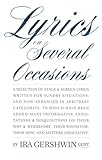 Ira Gershwin
Lyrics on Several Occasions
Limelight Editions
Paperback: 424 pages
(2 pages including the following types of information: anecdotal and song lyrics.)
|
|
|
|
|
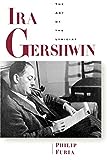 Philip Furia
Ira Gershwin: The Art of the Lyricist
Oxford University Press; Reprint edition
Paperback: 308 pages
(1 page including the following types of information: history and lyric analysis.)
|
|
|
|
|
| This section shows the jazz standards written by the same writing team. |
|
|
|
|
Comment Policy
- Your comments are welcome, including why you like
this tune, any musical challenges it presents, or additional background information.
- Jazz musicians, fans, and students of all ages use this website as an educational resource.
As such, off-topic, off-color, unduly negative, and patently promotional comments will be removed.
- Once submitted, all comments become property of JazzStandards.com.
By posting, you give JazzStandards.com permission to republish or otherwise distribute your comments in any format or other medium.
JazzStandards.com reserves the right to edit or remove any comments at its sole discretion.
|
|
| Click on any CD for more details at Amazon.com |
 Fred Astaire
The Essential Fred Astaire
Sony
|
|
Astaire’s original hit version includes his great vocals, the appealing backing of the Ray Noble Orchestra and some fabulous tap dancing.
|
 Art Tatum
The Complete Capitol Recordings
Blue Note Records
|
|
Pianist Tatum makes it sound so easy on this technically awesome yet totally relaxed medium-tempo swing performance of “Nice Work If You Can Get It).
|
 Sarah Vaughan
Sarah Vaughan in Hi-Fi
Columbia
Original recording 1950
|
|
This subtle, swinging performance is vintage early-period Vaughan and features great comping by her longtime pianist Jimmy Jones. Meanwhile, in one of his last significant sideman appearances, Miles Davis chips in with a melodic trumpet solo.
|
 Stan Getz
1951-1952
Melodie Jazz Classic
Original recording 1952
|
|
Originally issued under guitarist Johnny Smith’s name, this performance includes excellent solos and some intense, dexterous unison lines between Smith’s guitar and Getz’s tenor saxophone.
|
 Ella Fitzgerald
Pure Ella
Verve
Original Recording 1954
|
|
The first of vocalist Fitzgerald’s recordings of “Nice Work If You Can Get It” is this gently swinging and irresistable duet with pianist Ellis Larkins.
|
|
 Benny Green
Green's Blues
2001 Telarc 83539
Original recording 2001
|
|
It is hard to believe that there is only Green alone at the piano on this high energy gospel-laced rendition of the song. The pianist skitters across the keys with the urgency of a hummingbird.
|
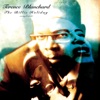
 Terence Blanchard
The Billie Holiday Songbook
1994 Columbia 57793
Original recording 1994
|
|
Vocalist Jeanie Bryson’s dulcet tones and Blanchard’s muted trumpet set atop a mid-tempo swing create a melancholy atmosphere of bittersweet romance.
|
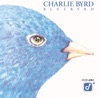
 Charlie Byrd
Blue Byrd
1991 Concord 4082
Original recording 1978
|
|
Byrd presents a full-bodied, gypsy swinger ripe with intricate picking and propelled by a rhythm section that suggests Latin influences.
|
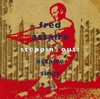
 Fred Astaire
Steppin' Out: Astaire Sings
Polygram Records
Original recording 1952
|
|
The great songswriters--Berlin, the Gershwins, Porter, and Kern--loved for Astaire to introduce their songs. He had a pleasant voice, an affection for the lyrics, and a marvelous rhythmic sense. In this recording he’s featured with the heavyweights of jazz such as Oscar Peterson, Ray Brown, Barney Kessel and others.
|
 Tony Bennett
Steppin' Out
1993 Sony 57424
|
|
Tony Bennett’s tribute to Astaire with the Ralph Sharon Trio also includes a wonderful version of the song.
|
|
|
|