|
|
|
| “Trumpeter/vocalist Chet Baker’s vocal rendition from 1954 helped bring the number into a wider sphere than just jazz fans.” |
|
 |
|
- Chris Tyle
|
|
| |
“There Will Never Be Another You” was one of the bright spots in Twentieth Century-Fox’s 1942 film Iceland. John Payne serenaded costar Sonja Henie with the song, and Joan Merrill sang it backed by Sammy Kay and His Orchestra.
|
| |
| |
|
| |
|
|
| |
| |
|
| |
|
A modest hit at the time, “There Will Never Be Another You” appeared on the pop charts by:
- Woody Herman and His Orchestra (1942, #23)
- Sammy Kaye and His Orchestra (1943, Nancy Norman, vocal, #20)
- Chris Montez (1966, #33)
|
|
| |
|
| |
|
With the production of Iceland, Twentieth Century-Fox was hoping to repeat the success of Sun Valley Serenade. Although the film company employed the same director, H. Bruce Humberstone, and cast the same leads, Sonja Henie and John Payne, the lavish production did not measure up to its predecessor. The film was even described as a “Wheezy old bore” by Clive Hirschhorn, author of Hollywood Musicals. Audiences, too, were indifferent, apparently not enamored of the lightweight plot revolving around a marine and a Reykjavik girl. On the positive side, the skating sequences are some of Henie’s best and the musical score, although uneven, had its own captivating moments, including “There Will Never Be Another You,” “You Can’t Say No To A Soldier” and “It’s a Lover’s Knot.”
|
| |
| |
|
| |
|
|
| |
| |
|
| |
|
|
|
|
|
More information on this tune... |
|
|
 Allen Forte
Listening to Classic American Popular Songs
Yale University Press; Book & CD edition
Hardcover: 219 pages
(In six pages the author covers the history of the song, analyzes both the music and lyric, and includes the song lyric. The book also has a companion CD.)
|
|
|
|
See the Reading and Research page for this tune for additional references. |
|
- Jeremy Wilson
|
|
| This section suggests definitive or otherwise significant recordings that will help jazz students get acquainted with
“There Will Never Be Another You.” These recordings have been selected from the Jazz History and
CD Recommendations sections.
|
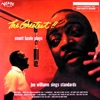
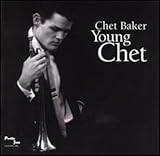
“There Will Never Be Another You” has historically lent itself very well to performances by singers and players with the ability to swing light-heartedly. Chet Baker’s trumpet and vocals share the stage on his classic 1954 recording ( Young Chet), swinging gently with his West Coast rhythm section. Count Basie’s 1956 version with the vocals of Joe Williams ( The Greatest! Count Basie Plays, Joe Williams Sings Standards) has a very different feel from Baker’s, but shares the trait of lighthearted swing.
Noah Baerman - Jazz Pianist and Educator
|
At first blush, lyricist Mack
Gordon’s sentiment in “There Will
Never Be Another You” sounds complimentary
and romantic, at least by virtue
of its hook phrase. The verse tells
a different tale, one emotionally
mixed, of two lovers parting. The
refrain describes the “other” nights,
lovers, songs, seasons, and lips
that lie in store, though “There
Will Never Be Another You.”
The lyrics are unusual for a
Tin Pan Alley song; the pure sweet
sentiment seems out of place in
the context of an impending breakup.
In a 1940’s Hollywood film score,
however, it makes perfect sense,
the parting only a temporary diversion
to create drama – with a happy ending
being less than an hour away.
With its A-B1-A-B2 form, the enduring
strength of “There Will Never Be
Another You” is Harry Warren’s unusual
melody. In general, each A section
comprises two long sequences of
ascending quarter notes. The B sections
more or less invert the idea containing,
in the main, three descending sequences
of quarter notes. The overall feeling
then is that of rising and falling,
moderated by brief changes of direction,
with no true bridge. -JW
|
Musical analysis of
“There Will Never Be Another You”
|
| Original
Key |
Eb major |
| Form |
A – B1 –A
– B2 |
| Tonality |
Major throughout |
| Movement |
Primarily
scale-wise in both directions; few skips
and only one upward leap in the entire piece |
|
Comments
(assumed
background)
|
|
This melody’s careful construction is what
makes it memorable: a sequence of two virtually
identical phrases, the second one played
diatonically a third higher than the first,
is followed by two more phrases that roughly
mirror the opening ones. This is a fairly
easy tune to learn and memorize and is one
of the first tunes learned by the novice
jazz performer.
The harmonic progression of the first
twelve measures is reminiscent of the “B”
section of “Laura Lee” (a.k.a. “Love
Me Tender”). Composer Warren, of course,
uses chord substitutions – m7 and m7(b5)
for secondary dominants – but the basic
sequence (I – III7 – vi – I7 – IV –iv –
I) is still intact. The last four measures
of “B1” consist of a II7 – V7 turnaround
returning to “A”, while “B2” uses IV – iv
– I – iii – VI7 on its way out, skipping
the ii7-V7 modulation and going directly
back to I for the final four measures. The
chords written in
The Real Book are:
Ebma7 – D7 – G7 – C7 in mm. 5-6 of “B2”;
however, the melody here implies that Warren’s
original changes were Ebma7 – Bb7(+5) –
Eb6 – C7(+5) before ending on a ii7 – V7
– I cadence.
|
|
K. J. McElrath - Musicologist for JazzStandards.com |
|
After
Woody Herman’s initial recording of this tune
in 1942, it dropped out of sight until being picked
up again vibraphonist Lionel Hampton’s big band
in 1950. That same year, talented saxophonist Sonny
Stitt would record a version on tenor sax. (After
the death of Charlie Parker, Stitt concentrated on
alto.) One of the players who inspired Stitt (especially
on tenor), Lester Young, laid down a recording of
his own with the Oscar Peterson Trio in 1952.
The piano genius Art Tatum’s version for Verve
in 1953 includes the seldom-heard verse. Trumpeter/vocalist
Chet Baker’s vocal rendition from 1954 helped bring
the number into a wider sphere than just jazz fans.
Indeed, the tune’s popularity continued with many
subsequent jazz recordings.
Chris Tyle - Jazz Musician and Historian
|
Additional information for "There Will Never Be Another You" may be found in:
|
|
|
Allen Forte
Listening to Classic American Popular Songs
Yale University Press; Book & CD edition
Hardcover: 219 pages
(6 pages including the following types of information: history, lyric analysis, music analysis and song lyrics. (Book includes CD).)
|
|
|
|
|
 Robert Gottlieb, Robert Kimball
Reading Lyrics
Pantheon
Hardcover: 736 pages
(Includes the following types of information: song lyrics.)
|
|
|
|
|
“There Will Never Be Another You” was included in these films:
- Iceland (1942, 1-John Payne,
2-Joan Merrill, Sammy Kaye and His Orchestra)
- I’ll Get By
(1950)
- The World According to Garp
(1982)
- The Cemetery Club (1993, Etta
Cox)
- The Devil’s Own (1997)
- That Old Feeling (1997, Keely
Smith)
- Kissing Jessica Stein (2002,
Ernestine Anderson)
- Anything Else (2003, Lester
Young)
|
|
|
|
Comment Policy
- Your comments are welcome, including why you like
this tune, any musical challenges it presents, or additional background information.
- Jazz musicians, fans, and students of all ages use this website as an educational resource.
As such, off-topic, off-color, unduly negative, and patently promotional comments will be removed.
- Once submitted, all comments become property of JazzStandards.com.
By posting, you give JazzStandards.com permission to republish or otherwise distribute your comments in any format or other medium.
JazzStandards.com reserves the right to edit or remove any comments at its sole discretion.
|
|
| Click on any CD for more details at Amazon.com |
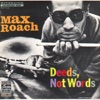
 Max Roach
Deeds, Not Words
1991 Original Jazz Classics 304
Original recording 1958
|
|
Max Roach was always one of the most melodic drummers in jazz. This duet with the brilliant and similarly groundbreaking bassist Oscar Pettiford is a good example of Roach’s melodic self-reliance.
|
|
 Count Basie with Joe Williams
The Greatest! Count Basie Plays, Joe Williams Sings Standards
Polygram Records
|
|
This is a match made in heaven as vocalist Joe Williams joins the Count Basie band. Williams is his usual exuberant self, his voice rich and sophisticated while the Basie crew swings with a vengeance.
|
 Buddy Collette
Nice Day With Buddy Collette
1999, Polygram
Original recording, 1957, Original Jazz Classics
|
|
In an infectious, crisp version of “There Will Never Be Another You” Collette’s saxophone weaves in and out of the piano runs on this cool bop version.
|
 Stan Getz
The Steamer
Polygram Records 547771
Original recording, 1956
|
|
Tenor saxophonist Getz sets the bar with this bouncy rendition. His velvet tone is complimented by a dynamite rhythm section of bassist Leroy Vinegar, pianist Lou Levy and drummer Stan Levey.
|
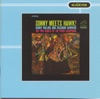
 Sonny Rollins
Sonny Meets Hawk!
1999 Polygram 63479
Original recording 1963
|
|
Most of this album documents a meeting between Sonny Rollins and his idol, Coleman Hawkins. This track, however, features Rollins in a loose quartet with trumpeter Don Cherry. Rollins performed this song frequently and developed a deep, exploratory relationship with it.
|
|
|
|