|
|
|
| “Nance’s solo on ‘Take the ‘A’ Train’ was so integral to the composition that he repeated it nightly verbatim. When he left in 1965, Cootie Williams continued playing his successor’s solo.” |
|
 |
|
- David Berger
|
|
| |
In 1941 Duke Ellington and His Orchestra introduced “Take the ‘A’ Train,” a composition that was later to become their signature tune. Their February 15 recording entered the pop charts in July and remained there for seven weeks, rising to number eleven. Ellington’s orchestra would see the same recording become a hit two years later, charting at number nineteen for one week.
|
| |
| |
|
| |
|
|
|
| |
|
| |
|
Coincident with Billy Strayhorn writing “Take the ‘A’ Train,” Duke Ellington was playing at the Casa Manana in Los Angeles and broadcasting nightly. Due to an ASCAP strike Ellington could not air his compositions, so he enrolled the help of Strayhorn and Mercer Ellington, his son, neither of whom belonged to ASCAP. Ellington’s dilemma turned out to be a great opportunity for both Strayhorn and young Ellington. Neither musician squandered his fortunate circumstance. Strayhorn wrote such songs as “Take the ‘A’ Train,” “Johnny Come Lately,” “Chelsea Bridge,” “Day Dream,” and “After All.” Mercer wrote, among others, “Things Ain’t What They Used to Be,” “Blue Serge,” and “Moon Mist.”
|
| |
| |
|
| |
|
“Take the ‘A’ Train,” however, was almost relegated to the wastebasket. In Stuart Nicholson’s Reminiscing in Tempo-A Portrait of Duke Ellington, Mercer Ellington describes how he retrieved “Take the ‘A’ Train” from the garbage. Strayhorn had thrown it there claiming it was an old thing and too much like Fletcher Henderson.
In The World of Duke Ellington by Stanley Dance, Strayhorn claims the title is about choosing the ‘A’ train over the ‘D’ train. He said he kept hearing about Harlem bound housewives who took the ‘D’ train and ended up in the Bronx, as it only went as far as 145th Street before turning off. If you want to go to Sugar Hill, you need to take the ‘A’ train! Another account has the title “Take the ‘A’ Train” evolving out of directions Ellington gave Strayhorn on how to get to Ellington’s Harlem apartment by subway.
On February 15, 1941, Duke Ellington and His Orchestra went into the RCA-Victor recording studios in Hollywood to record some of the Mercer Ellington and Billy Strayhorn compositions. Besides Strayhorn’s “Take The ‘A’ Train and “After All” there was Mercer’s “Jumpin’ Punkins,” “John Hardy’s Wife,” and “Blue Serge.” The personnel included Rex Stewart (cornet), Wallace Jones, Ray Nance (trumpet), Lawrence Brown and Joe Nanton (trombone), Juan Tizol (valve trombone), Barney Bigard (clarinet), Johnny Hodges (soprano sax, alto sax, clarinet), Otto Hardwick (alto sax, bass sax), Ben Webster (tenor sax), Harry Carney (clarinet, alto sax, baritone sax), Duke Ellington (piano), Fred Guy (guitar), Jimmy Blanton (bass), Sonny Greer (drums), and Billy Strayhorn (piano, replacing Ellington on “After All.”)
That 1941 recording of “Take the ‘A’ Train” may be considered definitive. Duke Ellington plays solo piano for the four bar introduction and then the A-A-B-A form is repeated three times. The first time the saxophones lead with support from the trumpets and trombones, then Ray Nance (on muted trumpet) leads, and after a four-bar transition and corresponding change of key, the saxophones and Nance (on open trumpet) take turns improvising on the theme, finally closing with fading repetitions of the last eight bars. The original Feb 15, 1941, Victor 27380 recording can be heard on the 3-CD set, Duke Ellington, Blanton-Webster Band, released in 1990 on RCA 5659.
Ray Nance’s trumpet solo would become the best known of his career. In his article, “Braggin’ in Brass,” composer, conductor, and Julliard Professor David Berger comments,
Nance’s solo on ‘Take The ‘A’ Train’ was so integral to the composition that he repeated it nightly verbatim. When he left in 1965, Cootie Williams continued playing [Nance’s] solo.
|
| |
| |
|
| |
|
|
|
|
|
More information on this tune... |
|
|
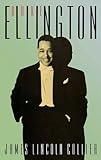 James Lincoln Collier
Duke Ellington
Oxford University Press, USA
Hardcover: 352 pages
(Ellington biographer Collier devotes two pages to the song’s history and offers a musical analysis.)
|
|
|
|
See the Reading and Research page for this tune for additional references. |
|
- Jeremy Wilson
|
|
| This section suggests definitive or otherwise significant recordings that will help jazz students get acquainted with
“Take the "A" Train.” These recordings have been selected from the Jazz History and
CD Recommendations sections.
|
This one is a no-brainer. While there are many great versions of this tune, any discussion of definitive recordings starts and ends with the 1941 original ( Never No Lament: The Blanton-Webster Band). Ellington’s supporting cast (with Ray Nance’s trumpet, Jimmy Blanton’s bass, Sonny Greer’s drums and Billy Strayhorn’s writing making a particularly major impact on this track) was never stronger than at this point in history, and it is no wonder that this tune became such an enduring standard when one listens to this remarkable performance.
Noah Baerman - Jazz Pianist and Educator
|
|
Musical analysis of
“Take the "A" Train”
|
| Original
Key |
C major;
temporary shifts to F major and Dmajor during
the bridge |
| Form |
A – A – B
– A |
| Tonality |
Major throughout |
| Movement |
Mainly leaps
(4th and larger, up to a downward major
7th) with brief chromatic passages interspersed |
|
Comments
(assumed
background)
|
|
Though considered up tempo, the tune and
its harmonic structure move very slowly–many
sustained notes over chords held up to two
measures. The exception is the brief burst
of rapid chromaticism that occurs at the
end of each “A”. Overall this is a challenging
tune that requires both breath support and
comfort with wide jumps and chromatic scale.
Strayhorn also uses elements of the whole-tone
scale in this piece with the D7(b5) in mm.3-4
of the “A” section; the melody at this point
is on the flatted fifth (Ab in the chord
of D7). Other than the occurrence of the
ninth twice during the “B” section, the
melody notes are within the triad of the
“chord of the moment.” |
|
K. J. McElrath - Musicologist for JazzStandards.com |
|
Jazz musicians are, by nature, experimenters. For example, it’s not unusual for them to try a different key, tempo or rhythm for a tune. This is truly how jazz becomes, as so eloquently stated by writer Whitney Balliet, the “Sound of Surprise.”
Ray Nance, trumpet soloist on Duke Ellington’s first recording of “Take the A Train,” was also a wonderful violinist frequently featured in Ellington’s band. At the memorial service for composer Billy Strayhorn in 1967, Nance performed the tune at a slow, dirge-like tempo, quite possibly the first time in such an unusual way. Nance later recorded the piece as a duet with pianist Roland Hanna in an emotional, moving performance that may quite possibly be his best work on violin.
Body and Soul, Ray Nance. Solid State LP SS 18062 (out-of-print).
Chris Tyle - Jazz Musician and Historian
|
Additional information for "Take the "A" Train" may be found in:
|
|
|
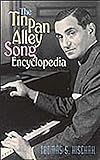 Thomas S. Hischak
The Tin Pan Alley Song Encyclopedia
Greenwood Press
Hardcover: 552 pages
(1 paragraph including the following types of information: film productions, history, performers and style discussion.)
|
|
|
|
|
James Lincoln Collier
Duke Ellington
Oxford University Press, USA
Hardcover: 352 pages
(2 pages including the following types of information: history and music analysis.)
|
|
|
|
|
 Gary Giddins
Visions of Jazz: The First Century
Oxford University Press; New Ed edition
Paperback: 704 pages
(1 page including the following types of information: history and music analysis.)
|
|
|
|
|
“Take the "A" Train” was included in these films:
- Reveille with Beverly (1943,
Bette Roche, The Duke Ellington Orchestra)
- Paris Blues (1961, Duke Ellington)
- Mingus (1968, Charles Mingus)
- Let’ Spend the Night Together
(1982, Duke Ellington and His Orchestra)
- In the Mood aka The Woo Woo Kid
(1987)
- Radio Days (1987, Duke Ellington
and His Famous Orchestra)
- For Love or Country: The Arturo Sandoval
Story (2000, Irakere) HBO biopic
- Catch Me If You Can (2002)
And on stage:
- Jump for Joy (1941, Duke Ellington
and His Orchestra)
- Bubbling Brown Sugar (1976,
instrumental) Broadway musical
- Sophisticated Ladies (1981,
Phyllis Hyman, Gregory Hines) Broadway musical
- Play On! (1997, Cheryl Freeman)
Broadway musical
And on television:
- New York: A Documentary Film
(1999, Duke Ellington and His Orchestra)
PBS American Experience
- Play On! (2000, Natalie Venetia
Belcon) PBS Great Performances
|
| This section shows the jazz standards written by the same writing team. |
|
|
|
|
Comment Policy
- Your comments are welcome, including why you like
this tune, any musical challenges it presents, or additional background information.
- Jazz musicians, fans, and students of all ages use this website as an educational resource.
As such, off-topic, off-color, unduly negative, and patently promotional comments will be removed.
- Once submitted, all comments become property of JazzStandards.com.
By posting, you give JazzStandards.com permission to republish or otherwise distribute your comments in any format or other medium.
JazzStandards.com reserves the right to edit or remove any comments at its sole discretion.
|
|
| Click on any CD for more details at Amazon.com |
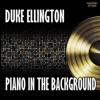
 Duke Ellington
Piano in the Background
Sony
Original recording 1960
|
|
Ellington’s playful and frequently surprising piano is actually in the foreground for much of this 1960 re-arrangement.
|
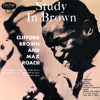
 Clifford Brown
Study In Brown
1990 Polygram 14646
Original recording 1955
|
|
Clifford Brown’s quintet with Max Roach is at the height of its powers on his hard-swinging performance. Harold Land’s tenor saxophone is also prominent.
|
Clark Terry
Duke With A Difference
1991 Original Jazz Classics 229
Original recording 1957
|
|
Terry’s uplifting tone and rhythmic sense are a perfect fit for this song. This relaxed performance also features solos by two other notable Ellingtonians, tenor saxophonist Paul Gonsalves and trombonist Britt Woodman.
|
 Oscar Peterson
Oscar Peterson Plays the Duke Ellington Song Book
Polygram Records
Original recordings 1952 and 1959
|
|
This album features two delightful versions of “A Train” with two different trios, both featuring Ray Brown on bass. The 1952 version has Barney Kessel on guitar, while the 1959 version documents the trio with Ed Thigpen on drums.
|
 Sun Ra
Solo Piano Recital: Teatro la Fenice Venizia
2003 Golden Years of New 21
Original recording 1977
|
|
Sun Ra takes a playful romp through “A Train” that transforms over the course of four minutes from bluesy swing to avant-garde chaos.
|
|
Betty Roché
Take the "A" Train
1995, Bethlehem Jazz
Original recording, 1956
|
|
After stints with the Duke Ellington and Earl Hines bands, Roche made it on her own with this bop version of the Strayhorn classic.
|
 Joe Henderson
Lush Life: The Music of Billy Strayhorn
1992 Polygram 11779
|
|
Henderson’s Grammy-winning CD pays tribute to the music of Billy Strayhorn with a quintet including Wynton Marsalis (trumpet), Stephen Scott (piano), Christian McBride (bass), and Gregory Hutchinson (drums). The tenor saxophonist plays “Take the A Train”’ in duet with Hutchinson.
|
 Mark Murphy
Kerouac, Then and Now
1994, Muse 5359
Original recording, 1986
|
|
In one of Murphy’s finest and most original CD’s, he prefaces his swinging rendition of “Take the A Train”’ with a vocalese tribute to one of its masters, Eddie Jefferson.
|
|
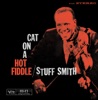
 Stuff Smith
Cat on a Hot Fiddle
2004, Verve
Original recording, 1959
|
|
Violinist Stuff Smith is his usual playful self as he rips through a searing rendition of the Ellington tune.
|
 Clarence "Gatemouth" Brown
Gate Swings
1997 Verve #537617
|
|
Blues guitarist Brown celebrates 50 years of performance by paying tribute to a composer that inspired him in the beginning. Brown’s delicate phrasing tempers the large sound of the big band backing him.
|
|
|
|