|
|
|
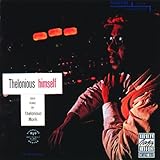
| “... this CD reissue features a wonderful glimpse into Monk’s process with over twenty minutes of false starts that preceded the full version.” |
|
 |
|
- Noah Baerman
|
|
| |
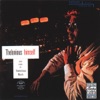
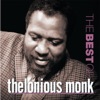
“‘Round Midnight” is Thelonious Monk’s best-known jazz composition and carries the grand distinction of being the most-recorded jazz standard written by any jazz musician. The Monk CD, Best of the Blue Note Years documents the 1947 group recording of “‘Round Midnight” (1991, Blue Note 95636). A solo version from 1957 is available on Thelonious Himself (1991, Orig. Jazz Classics 254).
|
| |
| |
|
| |
|
|
| |
| |
|
| |
|
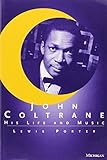
According to Thomas Fitterling in Thelonious Monk: His Life and Music, Monk wrote “‘Round Midnight” when he was just 18. Eight years later, in 1944, at jazz pianist Bud Powell’s urging, Cootie Williams and His Orchestra recorded the song. Depending on whose version of history you believe, Williams modified the composition either very slightly or not at all. In any case, he shares credit for it in terms of copyright. Originally titled “’Round About Midnight,” Monk’s composition became the theme song for Williams’ Orchestra. Jackie Paris introduced it as a vocal in 1949, after Bernie Hanighen added the lyrics.
|
| |
| |
|
| |
|
Notes on www.monkzone.com state that “in 1946, Dizzy Gillespie added his famous introduction and cadenza for his big band arrangement, which proved so popular that Monk added it (albeit an altered version) to his own performance... It is now a standard part of the song. Monk first recorded it as a leader on November 21, 1947.”
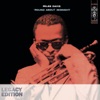
A major turning point for “’Round Midnight,” for Miles Davis, and also for the world of jazz was Davis’ show-stopping performance of the song at the 1955 Newport Jazz Festival. This was considered a sort of comeback for Davis, resulting in a contract with Columbia Records and the release of one of the definitive recordings of “‘Round Midnight” on his 1956 ‘Round About Midnight LP with John Coltrane (ts), Red Garland (p), Paul Chambers (b), and Philly Joe Jones (d). The original session is available on Davis’ ‘Round About Midnight (2001, Sony).
Davis’ performance at Newport and his subsequent recording played a large part in introducing this song to the jazz public at large. One critic has called it the “National Anthem of Jazz.”
“’Round Midnight” is best characterized as a “darkly beautiful” ballad with an “after-hours” feel that manages to sound fresh and original decade after decade. Its haunting overtones are nearly tangible. Bernie Hanighen wrote the poignant lyrics about a rocky love affair and the resulting sadness,
“I’m feelin’ sad ...my heart is still with you”
and longing,
“Let our hearts take wings ...Let the angels sing...”
‘Round Midnight is also the title of a critically acclaimed film starring Dexter Gordon (1923-1990) as Dale Turner. Turner is a composite character loosely based around the lives of Bud Powell (1924-1966), Lester Young (1909-1959), and even a little bit of Gordon himself. In the film, Turner is a brilliant but troubled tenor saxophone player in the 1950’s who spends his last eight years in Paris.
‘Round Midnight won both the British and Academy Awards for Best Score by Herbie Hancock. Hancock also appeared in the film along with musicians Wayne Shorter, Tony Williams, and Ron Carter. A CD of the film’s soundtrack is available and quite good. Gordon received an Academy Award nomination for Best Actor in the film. It is not a direct adaptation of the book, Dance of the Infidels: A Portrait of Bud Powell; however, a fictionalized version of the relationship between Bud Powell and the book’s author, Francis Paudras, is portrayed in the film.
|
|
|
|
More information on this tune... |
|
See the Reading and Research page for this tune for additional references. |
|
- Jeremy Wilson
|
|
| This section suggests definitive or otherwise significant recordings that will help jazz students get acquainted with
“'Round Midnight.” These recordings have been selected from the Jazz History and
CD Recommendations sections.
|
Composer Thelonious Monk recorded “’Round Midnight” multiple times, and it is not surprising that these recordings are the place to start in learning this tune. His original version for Blue Note ( The Best of the Blue Note Years) is perhaps the most historically significant, while his 1957 solo piano version on Riverside ( Thelonious Himself) offers the most intimate glimpse of Monk’s relationship with the tune. For many people, the definitive recording of the tune is not one by Monk at all, but rather the irresistible 1956 recording by Miles Davis ( ’Round About Midnight).
Noah Baerman - Jazz Pianist and Educator
|
|
Musical analysis of “’Round Midnight”
|
|
Original Key
|
Eb minor
|
|
Form
|
A1 -A2 -B -A2
|
|
Tonality
|
This is primarily minor; some performers put a “Picardy third” (parallel major tonic chord) at the end of “A2.”
|
|
Movement
|
Movement is angular; a mixture of arpeggiation, leaps, and chromatic movement in both directions.
|
|
Comments (assumed background)
|
|
The initial harmonic progression is i -vi -ii7 -V7, similar to “Alone Together.” The next two measures are unique, in which the i -IV is followed by a descending progression that eventually winds up in a brief false key change to the subdominant of Ab. The modulation, which provides some very nice descending guide-tones, is Bm7-E7-Bbm7-Eb7. The Bm7 and the E7 are upper embellishments of the V7 -I7 (V7 of IV) but also serve as backdrop for the melodic sequence, providing some vivid and unexpected tonal color. The “B” section, while sounding “all over the place,” is really based on a vi7(b5) -II7 -V7 progression which uses a tri-tone substitution for the II7, allowing the bass line to descend chromatically. This repeats twice and then continues on down. The progression we might expect to hear would be a ii7 -V7 -I in Gb major, but Monk likes to do the unexpected, landing on chords that are more coloristic than functional. The best advice to the novice learning this tune is: once you are familiar with the head, listen closely to the bass line.
|
|
K. J. McElrath - Musicologist for JazzStandards.com
|
|
In 1976 a group of French musicians (and a Swedish reed player) living in Paris came up with an interesting project. Specialists in “classic” jazz (pre-swing era jazz, often lumped under the simplistic term “dixieland”), they recorded an album of bebop “standards,” played in the jazz style of the mid-to-late 1920s. They named themselves the Anachronic Jazz Band, and the results were a musical and critical success. The recording garnered a French Sidney Bechet award in 1978, and the recording itself was an engineering throwback, made in stereo with only two microphones. The Anachronic Jazz Band’s version of “’Round Midnight” is reminiscent of Jabbo Smith’s 1920s small group recordings and includes a Jabbo-styled scat vocal by Daniel Huck. They even included Dizzy Gillespie’s original intro the tune.
Anachronic Jazz Band. Open LP OPO2 (French issue; a CD reissue, is now out-of-print, as is the LP)
Chris Tyle - Jazz Musician and Historian
|
Additional information for "'Round Midnight" may be found in:
|
|
|
 Robert Gottlieb, Robert Kimball
Reading Lyrics
Pantheon
Hardcover: 736 pages
(Includes the following types of information: song lyrics.)
|
|
|
|
|
“'Round Midnight” was included in these films:
- The Homecoming (1973,
Thelonious Monk, Gerry Mulligan)
- ’Round Midnight (1986,
Herbie Hancock, piano; Bobby McFerrin,
vocal; Ron Carter, bass; Tony Williams,
drums)
- Thelonious Monk: Straight,
No Chaser (1989, The Thelonious
Monk Quartet)
- Devil in a Blue Dress
(1995, Thelonious Monk)
- The Score (2001, Thelonious
Monk)
|
|
|
|
Comment Policy
- Your comments are welcome, including why you like
this tune, any musical challenges it presents, or additional background information.
- Jazz musicians, fans, and students of all ages use this website as an educational resource.
As such, off-topic, off-color, unduly negative, and patently promotional comments will be removed.
- Once submitted, all comments become property of JazzStandards.com.
By posting, you give JazzStandards.com permission to republish or otherwise distribute your comments in any format or other medium.
JazzStandards.com reserves the right to edit or remove any comments at its sole discretion.
|
|
| Click on any CD for more details at Amazon.com |
 Thelonious Monk
The Best of the Blue Note Years
Blue Note Records 95636
Original recording 1947
|
|
Monk’s first recording of the tune under his own name is an appropriately moody quintet version represented here.
|
 Thelonious Monk
Thelonious Himself
1991 Original Jazz Classics 254
Original recording 1957
|
|
The spiky “master take” of “’Round Midnight” on this album is one of Monk’s greatest renditions of the song. Better yet, the CD reissue features a wonderful glimpse into Monk’s process with over twenty minutes of false starts that preceded the full version.
|
 Miles Davis
Collector's Items
Original Jazz Classics 71
Original recording 1953
|
|
Davis presents a haunting version here featuring Charlie Parker on tenor saxophone (billed on the recording as “Charlie Chan” for contractual reasons) alongside Sonny Rollins, also on tenor.
|
 Miles Davis' New Quintet
‘Round About Midnight
Sony 85201
Original recording 1956
|
|
This is one of the best-loved versions of ‘Round Midnight and one of the definitive recordings of the classic 1950s Davis quintet with John Coltrane.
|
 Dexter Gordon
Homecoming: Live at the Village Vanguard
Date Sony 46824
Original recording 1976
|
|
In his return from years of living in Europe, Gordon shows convincingly here that he has lost none of his ability to get deep inside a ballad.
|
 Barry Harris
Chasin' the Bird
1996 Original Jazz Classics 872
Original recording 1962
|
|
Harris, one of the preeminent interpreters of Monk’s music, offers a soulful and reverential treatment of “’Round Midnight.”
|
 George Russell
Ezz-Thetics
1996 Original Jazz Classics 70
Original recording 1961
|
|
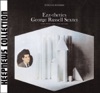
This essential recording puts the spotlight on the passionate, edgy alto saxophone of Eric Dolphy.
|
 Sarah Vaughan
Sarah Sings Soulfully
1993 Blue Note 98445
Original recording 1963
|
|
The loping melody of this song is perfectly suited to Sassy’s tasteful but acrobatic style, accompanied here by an organ-driven ensemble.
|
|
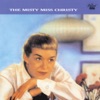
 June Christy
The Misty Miss Christy
1992, Blue Note 98452
Original recording, 1955
|
|
Master arranger Pete Rugolo creates an atmosphere of mystery with the ominous chiming of a big clock that opens “’Round Midnight.” And true to her nickname, the vocalist brings a misty quality to the song which conjures up a dark and foggy London night.
|
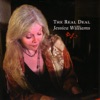
 Jessica Williams
The Real Deal
2004, Hep Jazz
|
|
In this solo set Williams, a pianist who has clearly delved deeply into Monk, strips “‘Round Midnight” down to its basics.
|
|
 Art Pepper
Art Pepper + Eleven
Original Jazz Classics 341
Original recording, 1959, Contemporary
|
|
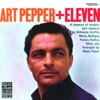
This CD is part of the “Modern Jazz Classics”’ series. Pepper plays alto, tenor, and clarinet on the CD with eleven other top-notch musicians. All of the arrangements are by the brilliant Marty Paich.
|
 Charlie Rouse
Epistrophy
2003, Savoy Jazz
Original recording, 1989
|
|
The tenor saxophonist played with Monk for over ten years and adapted his playing to the idiosyncratic pianist, so this stands as an informed reading of the song. Rouse also accompanied Carmen McRae on her 1988 vocal tribute to Monk.
|
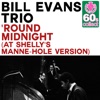
 Bill Evans Trio
...at Shelly's Manne Hole
Orig. Jazz Classics 263
Original recording, 1956
|
|
Evans’ reading is close to the original mood of the song but sadder and slower.
|
|
|
|