|
|
|
| “The definitive version of the song. Holiday’s reverence for not only the song but the sentiment is unmistakable.” |
|
 |
|
- Ben Maycock
|
|
| |
In her 1956 autobiography, Lady Sings the Blues, Billie Holiday recounts that “Jimmy [Davis] was in the Army when he wrote ’Lover Man’ and brought it straight to me.” Unfortunately, before she could record the song, Davis was shipped back to Europe and Holiday never saw him again. While the singer does not mention Jimmy Sherman she does lament “Ram Ramirez gets all of the credit for ‘Lover Man,’ but that’s only part of the story.”
|
| |
| |
|
| |
|
|
| |
| |
|
| |
|
|
| |
| |
|
| |
|
“Lover Man” was originally published in 1942, but, because of a dispute between the musician’s union and the recording companies, the song was not recorded by Holiday until 1944. In August of 1942, the president of the American Federation of Musicians called for a recording ban, demanding the studios pay royalties instead of flat fees for nearly all recording by AFM member musicians and orchestras. Holiday’s primary label at the time, Columbia, was a hold-out and, subsequently, one of the last to sign the AFM agreement late in 1944.
Holiday was anxious to start recording again. Her friend Milt Gabler had taken a job with Decca (a company that signed the AFM agreement in October of 1943) and was head of Commodore Records. Holiday had recorded a number of songs including “Strange Fruit” with Gabler, recordings Holiday insisted that “got Gabler in solid at Decca.” She approached Gabler with “Lover Man.” “I went on my knees to him, I loved it so. I didn’t want to do it with the ordinary six pieces. I begged Milt and told him I had to have strings behind me.”
|
| |
| |
|
| |
|
Gabler championed her cause and after a long struggle with Decca management, he fulfilled her wish. Holiday recorded “Lover Man” on October 4, 1944, with Toots Camerata and His Orchestra (Decca 23391). Camerata would later recount, “When she walked in and saw the string ensemble she was so overwhelmed she turned right around and walked out.” It wasn’t until seven months later the recording went onto the pop charts for only one week, in sixteenth place.
|
|
| |
|
| |
|
|
|
|
|
| This section suggests definitive or otherwise significant recordings that will help jazz students get acquainted with
“Lover Man (Oh, Where Can You Be?).” These recordings have been selected from the Jazz History and
CD Recommendations sections.
|
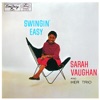
Billie Holiday is the jazz artist most closely associated with this song. Her 1944 recording of “Lover Man” ( Complete Dial Sessions Master Takes) is one of her defining moments. Sarah Vaughan, meanwhile, also developed a deep relationship with “Lover Man,” beginning with a 1945 recording alongside Dizzy Gillespie and Charlie Parker. It is her 1954 version ( Swingin’ Easy), though, that shows her ballad style in full maturity. Parker’s own version on Dial ( Complete Dial Sessions Master Takes) is a landmark moment in his recording career, albeit a somewhat unsettling one given the rawness of the performance.
Noah Baerman - Jazz Pianist and Educator
|
Thomas S. Hischak, in
The Tin Pan Alley Song Encyclopedia,
suggests that “Lover Man” “...is musically
very simple and has a narrow range but manages
to seem complex and textured because of
the rich harmony.” Alec Wilder agrees. In
American Popular Song: The Great Innovators,
1900-1950 he says of “Lover Man,”
“It’s a song of narrow range and needs the
harmony to bring out its character.” He
goes on to say that it has a “curious reminiscence”
of a slow tempo “Fascinating Rhythm.”
“Lover Man” has been called the bluest
of ballads. With its low-down, slangy lyrics
the song suited
Billie Holiday’s voice, which at that
point in her career projected sadness and
dejection. There is scarcely an optimistic
line in the song until the semi-hopeful
bridge, which ends with: “I go to bed with
a prayer, That you’ll make love to me, Strange
as it seems.” Then, as the song closes,
a wishful fantasy is expressed for five
lines, only to be tempered on the sixth
with a return to reality, “Lover man, oh,
where can you be?” -JW
|
Musical analysis
of “Lover Man (Oh, Where Can You
Be)”
|
|
Original Key |
Five
flats, starting in Bb minor and
migrating to the relative major
key |
|
Form |
A
– A – B – A |
|
Tonality |
Even
mixture of major and minor; some
key center ambiguity |
|
Movement |
Series
of upward leaps from an embellished
note; followed by scale-like patterns
that rise and fall. |
|
Comments
(assumed
background)
|
|
Not a “blues” in the strict sense,
this tune is certainly suggestive
of blues. The composer plays with
a series of ii7– V7 cadences that,
while resolving normally, often
play tricks on the ear. The piece
starts on the minor tonic of Bb
minor, but because of the melodic
contour and the fact that it is
followed by an Eb7, one might hear
it as a ii7 – V7 in Ab. However,
the Eb7 turns minor and alternates
with Ab7, now suddenly giving the
aural impression of ii7 – V7 in
Db. Because it resolves to Db minor
followed by a Gb7, this does not
really sound like the tonic, giving
the sound of ii7 – V7 in the key
of B (Cb). From the Gb7, the harmonic
progression goes to A7, which turns
out to be an augmented sixth chord
– a +6/V7 in the key of Db. Section
“B” also consists of a chain of
ii7 – V7 cadences, starting on Fm7,
going through the circle of fifths
until it arrives at F7 – V7 in the
key of Bb minor as it transitions
back into the final “A” section. |
|
K. J. McElrath - Musicologist for JazzStandards.com |
|
It’s interesting to find two versions
of a piece, recorded months apart, that
seem to be separated by light years.
Eddie Heywood, a fine swing style pianist,
laid down a version of “Lover Man” with
his sextet in December, 1944. Heywood’s
group had accompanied
Billie Holiday on a series of recordings
a few months earlier and was to have recorded
“Lover Man.” But Holiday wanted a group
with strings to back her on the tune.
In stark contrast,
Dizzy Gillespie’s rendition of “Lover
Man” with vocalist
Sarah Vaughan is a bebop classic, featuring
Gillespie’s trumpet and the great alto saxophonist
Charlie Parker. It no doubt had more to
do in making the tune a standard than Heywood’s
swing version.
Chris Tyle - Jazz Musician and Historian
 Eddie Heywood and His Orchestra
1944-1946
Classic 1038
|
|
|
|
|
Additional information for "Lover Man (Oh, Where Can You Be?)" may be found in:
|
|
|
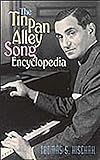 Thomas S. Hischak
The Tin Pan Alley Song Encyclopedia
Greenwood Press
Hardcover: 552 pages
(1 paragraph including the following types of information: Broadway productions, film productions, history, performers and style discussion.)
|
|
|
|
|
 Gary Giddins
Visions of Jazz: The First Century
Oxford University Press; New Ed edition
Paperback: 704 pages
(1 paragraph including the following types of information: anecdotal.)
|
|
|
|
|
“Lover Man (Oh, Where Can You Be?)” was included in these films:
- Lady Sings the Blues
(1972, Diana Ross)
- Lady Day: The Many Faces Of
Billie Holiday (1991,
Billie Holiday)
- Little Voice (1998,
Billie Holiday)
And on the small screen,
|
|
|
|
Comment Policy
- Your comments are welcome, including why you like
this tune, any musical challenges it presents, or additional background information.
- Jazz musicians, fans, and students of all ages use this website as an educational resource.
As such, off-topic, off-color, unduly negative, and patently promotional comments will be removed.
- Once submitted, all comments become property of JazzStandards.com.
By posting, you give JazzStandards.com permission to republish or otherwise distribute your comments in any format or other medium.
JazzStandards.com reserves the right to edit or remove any comments at its sole discretion.
|
|
| Click on any CD for more details at Amazon.com |
 Charlie Parker
Complete Dial Sessions Master Takes
Definitive/Disconforme SL
Original recording 1947
|
|
Recorded in the midst of a mental and emotional collapse, this version of “Lover Man” is one of Parker’s most emotionally raw moments. While it is certainly not his most polished recording, it is breathtakingly poignant.
|
 Sarah Vaughan
Swingin' Easy
1992 Polygram 14072
Original recording 1954
|
|
Vaughan finds a remarkable balance here, alternating between a reverent reading of the song and striking embellishment of the rhythm and melody.
|
 Ran Blake and Jeanne Lee
Newest Sound Around
2004 BMG International 174805
Original recording 1961
|
|
Accompanied sensitively by Blake’s piano, Lee stays true to the song’s spirit while taking some striking chances.
|
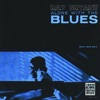
 Ray Bryant
Alone With the Blues
1996 Original Jazz Classics 249
Original recording 1958
|
|
As he does so often, Bryant here finds the perfect balance between lyricism and bluesy grit.
|
|
 Benny Carter
A Gentleman and His Music
1990, Concord 4285
Original recording, 1985
|
|
The alto saxist gives “Lover Man”’ a gentle touch in great company: Scott Hamilton (ts), Gene Harris (p), Joe Wilder (t & flug), Ed Bickert (g), John Clayton (b), and Jimmie Smith (d). Happily the seldom heard “Idaho”’ is included on the CD.
|
|
 Jimmy Smith
House Party
2000, Blue Note
Original recording, 1957
|
|
Hammond organist Jimmy Smith gives the song some funk to go with the blues on a track that features drummer Art Blakey.
|
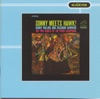
 Sonny Rollins
Sonny Meets Hawk!
1999 Polygram 63479
Original recording 1963
|
|
Saxophonist Rollins does what he does best, taking “Lover Man” to some intriguing new heights. His solo is highly creative but never disrespectful of the song’s original spirit.
|
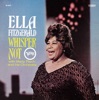
 Ella Fitzgerald
Whisper Not
2002 Verve 314589478
Original recording 1966
|
|
Fitzgerald gives “Lover Man” elegance without detracting from its honest despair.
|
|
|
|