|
|
|
| “...the champion, by common agreement, is Johnny Green’s ‘Body and Soul,’ a bridge unlike any other. ” |
|
 |
|
- William Zinnser on song bridges
|
|
| |
While in London, Hollywood songwriter/conductor Johnny Green wrote “Body and Soul” for Gertrude Lawrence. Jack Hylton & His Orchestra recorded the ballad first in Britain, but it was Paul Whiteman and His Orchestra (Jack Fulton, vocal) who popularized it. Their recording hit the charts on October 11, 1930, and held the number one spot for six weeks.
|
| |
| |
|
| |
|
|
| |
| |
|
| |
|
On October 15th, 1930, “Body and Soul” appeared in the Broadway revue, Three’s a Crowd. The show would run for 272 performances with Libby Holman performing the song as Clifton Webb danced. “Body and Soul” was one of the revue’s standout songs, and Holman’s recording rose to number three on the recording charts.
Although instantly popular, “Body and Soul” was banned from radio for nearly a year because of its suggestive lyrics, which leave little doubt as to their sexual nature. In spite of, or possibly because of, its racy lyrics, an astounding number of renditions made the charts in the 1930s and 1940s:
- Paul Whiteman and His Orchestra (1930, Jack Fulton, vocal)
- Libby Holman (1930, #3)
- Ruth Etting (1930, #10)
- Annette Hanshaw (1930, #12)
- Helen Morgan (1930, with Leonard Joy and His Orchestra)
- Ozzie Nelson and His Orchestra (1930, #18)
- Leo Reisman and His Orchestra (1930, Frank Luther, vocal, #15)
- Louis Armstrong (1932, originally recorded in 1930, #7)
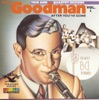
- Benny Goodman Trio (1935, instrumental, #5)*
- Henry Allen and His Orchestra (1935, Henry Allen, vocal, #17)
- Art Tatum and His Swingsters (1937, instrumental, #19)
- Coleman Hawkins (1940, instrumental, #13)
- Ziggy Elman and His Orchestra (1947, instrumental, #25)
- Billy Eckstine (1949, with Buddy Baker and His Orchestra, #27)
* The Benny Goodman Trio consisted of Benny Goodman on clarinet, Gene Krupa on drums, and Teddy Wilson on piano. Their release of “Body and Soul” and its flipside, “After You’ve Gone,” was their first recording endeavor.
|
|
| |
|
| |
|
“Body and Soul” is also the title of an excellent movie about an amateur boxer trying to make it to the top. The 1947 film stars John Garfield and Lilli Palmer. See Body and Soul for more information. There are two remakes which proved to be less satisfactory.
|
|
|
|
More information on this tune... |
|
|
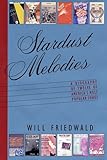 Will Friedwald
Stardust Melodies
Pantheon; 1st edition
Hardcover: 416 pages
(This book contains 37 pages on “Body and Soul” including its history, anecdotes, short biographies of the songwriters, analyses of both the lyric and music, and information on performers and recordings. The book also features in-depth looks at eleven other popular songs.)
|
|
|
|
See the Reading and Research page for this tune for additional references. |
|
- Jeremy Wilson
|
|
| This section suggests definitive or otherwise significant recordings that will help jazz students get acquainted with
“Body and Soul.” These recordings have been selected from the Jazz History and
CD Recommendations sections.
|
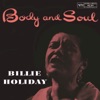
Not surprisingly, given its #1 ranking, “Body and Soul” has so many definitive versions that it is challenging to single out the most noteworthy. Coleman Hawkins’ version from 1939 ( Body and Soul) is the standout among them and unquestionably one of the most significant recorded performances in jazz history, though it is probably not the place to start learning the tune, given the fact that he makes only a passing reference to the tune’s melody. Dexter Gordon, meanwhile, had a long and deep relationship with the tune. There are many significant recordings of Gordon playing “Body and Soul,” and his first studio recording of the tune ( The Panther!) is a good place to start. As for vocal versions, Billie Holiday captured the song’s beautiful melody and deep sense of tragedy several times, particularly with her late-career version for Verve ( Body and Soul).
Noah Baerman - Jazz Pianist and Educator
|
Because of its complex chord progressions, “Body and Soul” remains a favorite of jazz musicians. The unusual changes in key and tempo are also highly attractive and provide a large degree of improvisational freedom. And finally, there is the bridge which, in Easy to Remember: The Great American Songwriters and Their Songs, William Zinnser calls “a bridge unlike any other. The first 4 bars are in the key that’s a half-tone above the home key... the next 4 bars are a half-tone below the home key.”
- JW
|
Musical analysis of “Body and Soul”
|
|
Original Key
|
Db major; false key changes to C major during section “B”
|
|
Form
|
A -A -B -A
|
|
Tonality
|
Primarily major
|
|
Movement
|
Primarily upward by leaps, descending scale and arpeggio-wise; “B” ascends by step, followed by leaps, then descends with upward moving intervals
|
|
Comments (assumed background)
|
|
A very motivic melody, thus easily remembered. Noteworthy is the use of the penultimate “blue note” (flatted third) at the end of “A,” -easily missed by the untrained or novice performer. The harmonic progression seems to be controlled by the movement of the bass line, descending and ascending by step (Ebm -Bb7/D -Ebm7/Db - Ab/C -Db -Ab9/Eb -Db/F -E°7 -Ebm -Ebm7/Db -Cm7(b5)) before returning to the tonic via the circle of fifths, using parallel minor substitutions. “B” works essentially the same way a half-step higher for the first four measures. The “tonic of the moment” then becomes minor, turning into the ii7 of the chord a whole step below, then repeats the a variation of the same melodic sequence, this time in a key a half-step below the original tonic. Instead of the linear progression, these four measures start with a ii7- V7 -I -vi -ii7 (substituting aiii for the I and a ct°7, or “common-tone diminished seventh” for vi), then returns to the ii7 of the original tonic key via a circle of fifths, using a tri-tone substitution on beat two of measure eight (in the original, C7 - B7 -Bb7 instead of C7 -F7 -Bb7).
|
|
K. J. McElrath - Musicologist for JazzStandards.com
|
|
In his 1985 book Rhythm-a-ning: Jazz Tradition and Innovation in the 80’s, Gary Giddins devotes a chapter to the celebration of the 50th anniversary of “Body and Soul.” After a short history of the song and commentary on its appeal, he lists 34 performances that he considers first-rate and which, at the same time, demonstrate the development of jazz over the period from 1930 to 1980. - SB
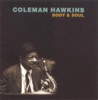
Out of all the hit recordings of “Body and Soul,” Coleman Hawkins’ is the best remembered. Considered the first truly great jazz saxophonist, Hawkins’ October 11, 1939, version cemented his fame and must be considered the definitive recording of the song. According to Mark C. Gridley, author of Jazz Styles: History and Analysis, “Coleman Hawkins loved to improvise on complicated chord progressions and invent solo lines whose construction implied that chords had been added. His recording of ‘Body and Soul’ demonstrates this.” In 1973, the National Academy of Recording Arts and Sciences inducted Hawkins’ 1939 recording into the Grammy Hall of Fame. The original recording is on Coleman Hawkins’ Body and Soul CD. An interesting reworking of the tune can be heard as the title cut on Hawkins’ 1944 Rainbow Mist recording on which he lays a new melody over the chord changes of “Body and Soul.” - JW
Although Louis Armstrong was the first jazz artist to record “Body and Soul” in 1930, his version clung close to the song’s written melody. In 1935, Armstrong’s New Orleans colleague Henry “Red” Allen’s version begins to plumb the improvisational possibilities of the tune. In a recording made for the indie label Commodore in November, 1938, tenor saxophonist “Chu” Berry explores the changes in a manner continued a year later by his mentor Coleman Hawkins. But it is the blistering, double-time solo by Roy Eldridge on Berry’s recording that steals the show and clearly points the direction that the trumpet would take in the work of Dizzy Gillespie.
Chris Tyle - Jazz Musician and Historian
 Coleman Hawkins
Rainbow Mist
Delmark
Original Recording 1944
|
|
|
|
|
Additional information for "Body and Soul" may be found in:
|
|
|
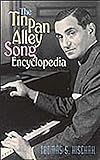 Thomas S. Hischak
The Tin Pan Alley Song Encyclopedia
Greenwood Press
Hardcover: 552 pages
(1 paragraph including the following types of information: film productions, history, lyric analysis, music analysis and performers.)
|
|
|
|
|
Will Friedwald
Stardust Melodies
Pantheon; 1st edition
Hardcover: 416 pages
(37 pages including the following types of information: history, lyric analysis, music analysis, performers, recordings and song writer discussion.)
|
|
|
|
|
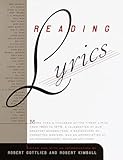 Robert Gottlieb, Robert Kimball
Reading Lyrics
Pantheon
Hardcover: 736 pages
(Includes the following types of information: song lyrics.)
|
|
|
|
|
 Henry Martin
Enjoying Jazz
Schirmer Books
Paperback: 302 pages
(1 page including the following types of information: music analysis and performers.)
|
|
|
|
|
 Gary Giddins
Visions of Jazz: The First Century
Oxford University Press; New Ed edition
Paperback: 704 pages
(4 paragraphs including the following types of information: history and performers.)
|
|
|
|
|
“Body and Soul” was included in these films:
- Stormy Weather (1943)
(outtake)
- Broadway Rhythm (1944, The
Hazel Scott Trio) outtake
- The Man I Love (1946, Ida
Lupino dubbed by Peg LaCentra)
- Body and Soul (1947)
- The Helen Morgan Story (1957,
Ann Blyth dubbed by Gogi Grant)
- They Shoot Horses, Don’t They?
(1969)
- Stardust Memories (1980, Django
Reinhardt)
- American Pop (1981)
- The Color Purple (1985)
- Round Midnight (1986, Dexter
Gordon)
- Radio Days (1987, Benny Goodman
Trio)
- Torch Song Trilogy (1988,
Charles Haden Quartet West)
- I Hired a Contract Killer
(1990)
- En Kaerlighedhistorie (2001,
Sven Wolter, Peaches Latrice Petersen)
- Catch Me If You Can (2002)
And on stage:
- Three’s a Crowd (1930, Libby
Holman) Broadway musical
- Body and Soul (1988) Munich
musical
- Black and Blue (1989, Ruth
Brown) Broadway revue
And on television:
- Edderkoppen (2000, Katrine
Madsen) Danish tv mini series
- Sex and the City (2002, Billie
Holiday) HBO TV series, Season 4, Episode 65,
"A ‘Vogue’ Idea"
|
|
|
|
Comment Policy
- Your comments are welcome, including why you like
this tune, any musical challenges it presents, or additional background information.
- Jazz musicians, fans, and students of all ages use this website as an educational resource.
As such, off-topic, off-color, unduly negative, and patently promotional comments will be removed.
- Once submitted, all comments become property of JazzStandards.com.
By posting, you give JazzStandards.com permission to republish or otherwise distribute your comments in any format or other medium.
JazzStandards.com reserves the right to edit or remove any comments at its sole discretion.
|
|
| Click on any CD for more details at Amazon.com |
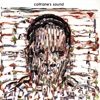
 John Coltrane
Coltrane's Sound
Atlantic / Wea 1419
Original recording 1960
|
|
With his newly-formed quartet, Coltrane gives a lyrical but harmonically quite modern interpretation of this song. His alterations to the chords, particularly the “Giant Steps” inspired bridge, have been adopted in many subsequent versions by other artists.
|
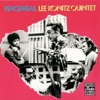
 Lee Konitz
Peacemeal
2004 Original Jazz Classics 1101
Original recording 1969
|
|
Konitz and his crew (including Eddie Gomez and Jack DeJohnette) fascinatingly bridge the gap between reverential and contemporary. The sound is modern and edgy, but Konitz and valve trombonist Marshall Brown are actually playing a transcription of Roy Eldridge’s solo from the classic Chu Berry recording.
|
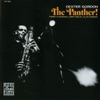
 Dexter Gordon
The Panther
1996 Original Jazz Classics 170
Original recording 1970
|
|
These recommendations could consist entirely of Dexter Gordon recordings, so deep and extensive was his relationship with the song. This gorgeous version features pianist Tommy Flanagan and uses modern harmonies derived from John Coltrane’s 1960 recording.
|
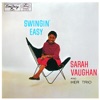
 Sarah Vaughan
Swingin' Easy
1992 Polygram 14072
Original recording 1954
|
|
Backed only by her trio, Vaughan delivers a heartbreaking “Body and Soul” and displays her ability to bend and twist a song without obscuring its melody.
|
|
 Walter Norris
Live at Maybeck Recital Hall Vol. 4
1990 Concord Records 4425
|
|
The piano wizard’s imagination is inspired, in this case (he says) by tenor saxophonist Teddy Edwards. This solo exploration of the tune is nothing less than magical and totally refreshing.
|
|
 Billie Holiday
Body and Soul
2002, Universal
Original recording, 1957, Verve
|
|
Vocalist Holiday is at her best here. Her sophistication and smoldering passion are enhanced by the polished playing of pianist Jimmy Rowles and guitarist Barney Kessel.
|
 Eddie Jefferson
Body and Soul
1991, Orig. Jazz Classics 396
Original recording, 1969
|
|
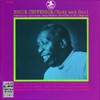
This most unusual reading of “Body and Soul” by the vocalese master is a gem, and the back-up musicians on the CD include James Moody and Barry Harris.
|
 Stefon Harris/Jacky Terrasson
Kindred
2001 Blue Note 31868
Original recording 2000
|
|
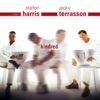
Pianist Terrasson and vibes player Harris (here on marimba) push each other to the limits on this high-energy, Latin-laced, bop version of the song.
|
|
|
|