|
|
|
| “[Fats] worked on it for 45 minutes and there it was-’Ain’t Misbehavin’.” |
|
 |
|
- Andy Razaf
|
|
| |
Fats Waller’s “Ain’t Misbehavin’” was introduced at Connie’s Inn in Harlem during the opening of the all-black musical revue, Hot Chocolates. The show proved such a success that it moved onto Broadway, opening at the Hudson Theatre on June 20, 1929, and running for 219 performances. The Connie’s Inn performance of “Ain’t Misbehavin’” was sung as an opening number by Margaret Simms and Paul Bass and then, later in the show, by Russell Wooding’s Hallelujah Singers. At the Hudson Theatre, the opening remained the same, but at intermission Louis Armstrong, in his Broadway debut, took to the stage to play “Ain’t Misbehavin’” as a trumpet solo.
According to the Kennedy Center’s website page, “A Place Called Harlem,” Connie’s Inn was a Harlem speakeasy that featured song and dance revues. Found at the intersection of 131st Street and 7th Avenue it was second in popularity only to the Cotton Club. The owners eventually opened the originally segregated club to blacks who were allowed to patronize the club after the whites had gone home. Fats Waller was in good company at Connie’s Inn, at least with regard to other performers which included the likes of Duke Ellington, Fletcher Henderson, and Ethel Waters.
|
| |
| |
|
| |
|
|
| |
| |
|
| |
|
In David Ewen’s book, American Songwriters: An H.W. Wilson Biographical Dictionary, Andy Razaf divulges, “I remember one day going to Fats’ house to finish up a number based on a little strain he thought up. The whole show was complete, but they needed an extra number for a theme, and this had to be it. He worked on it for 45 minutes and there it was-“Ain’t Misbehavin’.” Columnist David Hinckley provides another account. “The song, as Waller told it, was composed at Razaf’s 133rd St. apartment in about 45 minutes. It reflected Waller’s habit of finding a few riffs and repeating them until he had a 32-bar song.”
|
| |
| |
|
| |
|
Regardless of whose house that 45 minutes was spent in, “Ain’t Misbehavin’” has become one of Razaf and Waller’s most enduring compositions. For jazz vocalists and musicians, “Ain’t Misbehavin’” is second in popularity only to “Honeysuckle Rose.”
Leo Reisman and His Orchestra’s recording of the song was the first to appear on the pop charts, rising to number two in August of 1929. In all there were half a dozen hit recordings in 1929:
- Leo Reisman and His Orchestra (Lew Conrad, vocal, #2)
- Louis Armstrong (#7)
- Bill Robinson (Bojangles) (with Irving Mills and His Hotsy Totsy Gang , #8)
- Gene Austin (with Leonard Joy and His orchestra, #9)
- Ruth Etting (#16)
- Fats Waller (instrumental, #17)
And then in 1937:
Fats Waller’s 1929 recording was inducted into the Grammy Hall of Fame in 1984.
|
|
| |
|
| |
|
In 1978 Ain’t Misbehavin’ was used as the title of a musical about the Harlem Renaissance. Wildly successful, the show moved from the Manhattan Theatre Club to Broadway. Opening at the Longacre Theatre on May 9, 1978, the show ran for 1,604 performances and won Tony Awards for best musical, best director of a musical, and best actress in a musical.
|
|
|
|
More information on this tune... |
|
See the Reading and Research page for this tune for additional references. |
|
- Jeremy Wilson
|
|
| This section suggests definitive or otherwise significant recordings that will help jazz students get acquainted with
“Ain't Misbehavin'.” These recordings have been selected from the Jazz History and
CD Recommendations sections.
|
While there are many excellent and important versions of “Ain’t Misbehavin’,” one need not go beyond the recordings by Fats Waller to gain an understanding of the tune. The 1929 original ( Piano Masterworks, Vol. 1) is a shining example of Waller’s influential solo piano style. Meanwhile, any of his numerous vocal versions, including the one from 1939 ( 1939 Transcriptions, Vol. 2), give insight into Waller the entertainer and into the tune’s lyrics.
Noah Baerman - Jazz Pianist and Educator
|
To Waller’s repeated phrases,
lyricist Andy Razaf fit a series of slangy statements
vowing fidelity. He finishes each A section of the
32-bar A-A-B-A form with “Ain’t Misbehavin’, I’m
saving my love for you.” This musical and lyrical
repetition is not only made tolerable but bright
and appealing by Waller’s ascending bass line progressions.
- JW
|
Musical analysis of “Ain’t Misbehavin’”
|
|
Original Key
|
C major; turns to relative minor during the first four measures of the bridge, then to G before returning to the original key
|
|
Form
|
A -A -B -A
|
|
Tonality
|
Primarily major, with a brief minor passage
|
|
Movement
|
Steps up and down followed by a leap upward; downward skips during “B”
|
|
Comments (assumed background)
|
|
The harmonic movement of “A” as originally written is fairly simple, based on I -ii7 -V7 and I -V7/IV -IV -iv progressions and variations. More recently, jazz players use an ascending progression of I - vii°7/ii -ii -ii°7, etc., almost identical to “Doin’ the New Lowdown” and similar to the opening measures of “Memories Of You.” The transition to the relative minor in the “B” section is not unusual or difficult, but there is one spot in which a secondary dominant resolves straight to the tonic of the moment without the traditional V7 in between. This happens in mm. 20-21, in which Waller goes directly from A7 to G without using the F7*. It is jarring to say the least. Players should take care not to get thrown off at this point. Because of where the melody sits at that point, it is possible for the rhythm player(s) to insert a V7 on beat four, but this may be awkward (perhaps the reason Waller omitted the V7 here). Another solution might be to put a vii°7 under the melody note here (in the original, C°7, Eb°7 or F#°7), which might make for a smoother transition to the new key.
* Editor’s note: A visitor suggests this should read, “A7 to G without using the D7.”
|
|
K. J. McElrath - Musicologist for JazzStandards.com
|
|
During World War II, the Musician’s Union ban on recording and a post-war tax on entertainment effectively ruined the big bands. Struggling under the big band burden, Louis Armstrong was at a crossroads. Thanks to promoter Ernie Anderson, a concert at Town Hall on May 12, 1947, initiated a new direction for Armstrong. Anderson assembled an all-star group to perform with Louis, including old friends Bobby Hackett (cornet), Jack Teagarden (trombone), and Sid Catlett (drums). A live recording documents the evening, with a version of “Ain’t Misbehavin’” that is not only remarkable for Armstrong’s vocal and trumpet playing but for the explosive drumming of Sid Catlett (who was the inspiration of later players such as Max Roach, Art Blakey and Shelly Manne).
Chris Tyle - Jazz Musician and Historian
|
Additional information for "Ain't Misbehavin'" may be found in:
|
|
|
 George T. Simon
Big Bands Songbook
Barnes & Noble
Paperback
(4 pages including the following types of information: song writer discussion and sheet music.)
|
|
|
|
|
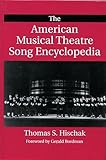
 Thomas S. Hischak
The Tin Pan Alley Song Encyclopedia
Greenwood Press
Hardcover: 552 pages
(1 paragraph including the following types of information: film productions, history and performers.)
|
|
|
|
|
 Robert Gottlieb, Robert Kimball
Reading Lyrics
Pantheon
Hardcover: 736 pages
(Includes the following types of information: song lyrics.)
|
|
|
|
|
“Ain't Misbehavin'” was included in these films:
-
Stormy Weather (1943, Fats Waller)
-
Follow the Band (1943, Mary Beth Hughes)
-
Atlantic City (1944,
Louis Armstrong with his band)
-
You Were Meant For Me (1948, Dan Dailey)
-
The Strip (1951,
Louis Armstrong, Mickey Rooney)
-
Ain’t Misbehavin’ (1955)
-
Gentlemen Marry Brunettes (1955, Alan
Young, Jane Russell, Jeanne Crain,
Rudy Vallee)
-
Lucky Lady (1975)
And on Broadway:
-
Ain’t Misbehavin’ (1978, Armelia McQueen,
Charlaine Woodward, Ken Page, Nell Carter)
-
Ain’t Misbehavin’ (1988 revival)
|
|
|
|
Comment Policy
- Your comments are welcome, including why you like
this tune, any musical challenges it presents, or additional background information.
- Jazz musicians, fans, and students of all ages use this website as an educational resource.
As such, off-topic, off-color, unduly negative, and patently promotional comments will be removed.
- Once submitted, all comments become property of JazzStandards.com.
By posting, you give JazzStandards.com permission to republish or otherwise distribute your comments in any format or other medium.
JazzStandards.com reserves the right to edit or remove any comments at its sole discretion.
|
|
| Click on any CD for more details at Amazon.com |
"Fats" Waller
Piano Masterworks, Vol. 1
EPM Musique 158922
Original recording 1929
|
|
Fats Waller is perhaps best known as an all-around entertainer, so it is easy to overlook his brilliant and influential piano artistry. Here, on the original recording of this tune, Waller treats us to a wonderful instrumental performance alone at the piano.
|
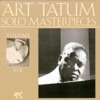
 Art Tatum
Solo Masterpieces, Vol 6
Pablo 2405437
Original recording 1953
|
|
Art Tatum was Waller’s colleague, friend and rival and took Waller’s solo piano skills to another level. This relaxed yet stunning solo romp on Waller’s classic tune gives us a fascinating context in which to hear this progression of styles.
|
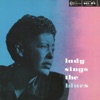
 Billie Holiday
Lady Sings the Blues: The Billie Holiday Story, Vol.4
Polygram Records
Original recording 1955
|
|
Holiday is in fine late-career form on this performance. She is matched up with an all-star cast of jazz instrumentalists including clarinetist Tony Scott and tenor saxophonist Budd Johnson.
|
|
 Howard Alden With George Van Eps, Howard Alden
13 Strings
Concord Records
|
|
This amazing performance features Alden on 6-string guitar and Van Eps on 7-string in several settings. But Van Eps, who once worked with Fats Waller, plays “Ain’t Misbehavin’”’ as a solo, providing bass, chords and melody with beautiful and incomprehensible results.
|
|
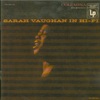
 Sarah Vaughan
Sarah Vaughan in Hi-Fi
Sony
Original recording 1950
|
|
This classic Vaughan performance is taken at a relaxed tempo and features a cast of jazz giants including Miles Davis on trumpet.
|
 Fats Waller
Transcriptions Vol. 2 1939
2003, Naxos 8120692
|
|
”’Ladies and gentlemen, just to let you know, I paid my alimony and I ain’t misbehavin’”’ is how Waller introduces this definitive rendition of his song. Played and sung in the spirit it was written, Waller is equal parts wit and mastery on this infectious track.
|
 Dave Brubeck Quartet/Jimmy Rushing
Brubeck & Rushing
1998 Legacy Recordings 65727
Original recording 1960
|
|
There is nice interplay between the gruff vocals of Rushing and the delicate saxophone of Paul Desmond. The song takes on a bluesy feel under the direction of pianist Brubeck.
|
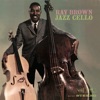
 Ray Brown
Jazz Cello
2003 Verve 440065295
Original recording 1960
|
|
Bassist Brown leads the group on a leisurely stroll through the song. Brown plucks out a lyrical solo, punctuated by brass.
|
|
|
|