|
|
|
| “Loosely based on the chords of ‘After You’ve Gone,’ Art Pepper’s signature tune ‘Straight Life’ is the title he would eventually use for his autobiography.” |
|
 |
|
- JW
|
|
| |
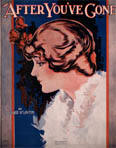
Creamer and Layton’s “After You’ve Gone,” joins “St. Louis Blues” (1914) and “Indiana” (1917) as the top three pre-1920s jazz standards. Few compositions of the early 20th century endured the transition to the smooth swing sound of the 1930s and beyond.
|
| |
| |
|
| |
|
|
| |
| |
|
| |
|
Al Jolson introduced “After You’ve Gone” to the vaudeville audience at the Wintergarden Theater in 1918. Within a year several other artists had recorded the song, but it was Marion Harris’s rendition that became the most popular, rising to number one for three weeks in 1919.
|
| |
| |
|
| |
|
|
| |
| |
|
| |
|
“After You’ve Gone” appeared on the charts:
- Henry Burr and Albert Campbell (1918, #2)
- Marion Harris (1919, with Rosario Bourdon’s Orchestra, #1)
- Billy Murray and “Rachel Grant” (Gladys Rice) (1919, #9)
- Bessie Smith (1927, Fletcher Henderson, piano, #7)
- Sophie Tucker (1927, with Miff Mole’s Molers, #10)
- Paul Whiteman and His Orchestra (1930, Bing Crosby, vocal, #14)
- Louis Armstrong (1932, #15)
- Benny Goodman Trio (1935, instrumental, #20)
- Lionel Hampton (1937, Lionel Hampton, vocal, #6)
- Quintet of the Hot Club of France (1937, instrumental featuring Django Reinhardt and Stephane Grappelli, #20)
|
|
| |
|
| |
|
|
|
|
|
More information on this tune... |
|
- Jeremy Wilson
|
|
| This section suggests definitive or otherwise significant recordings that will help jazz students get acquainted with
“After You've Gone.” These recordings have been selected from the Jazz History and
CD Recommendations sections.
|
“After You’ve Gone” was at its most prominent as a tune in the years before the bebop era, so it is not surprising to find definitive versions created by giants of the early jazz and swing eras. Blues diva Bessie Smith offered a performance for the ages in 1927 ( The Essential Bessie Smith), interacting effortlessly with an all-star band for a thoroughly assured performance. As for instrumental versions, Gene Krupa’s classic performance from 1941 ( Uptown) features Roy Eldridge in a career-defining moment that ranks among the swing era’s most breathtaking displays of virtuosity. Meanwhile, James P. Johnson’s intergenerational group was responsible for a classic 1944 performance ( Blue Note Jazzmen) that successfully bridges the gap between early jazz and swing.
Noah Baerman - Jazz Pianist and Educator
|
Written with a verse and a remarkably short
20-bar chorus, “After You’ve Gone” is typically
diagrammed with an A(4)-B(4)-A(4)-C(4) form,
which leaves the last four bars as an extension.
In terms of the lyrics, the verse sets the stage
for the refrain questioning,
“How could you tell me that
you’re goin’ away?”
closing with,
“Oh! honey baby, can’t you
see my tears? Listen while I say:”
While not in the traditional blues form, the
refrain for “After You’ve Gone” has a “call-response”
blues feeling. Each A section has two, 2-bar “call”
phrases
After you’ve gone and left
me cryin’
After you’ve gone there’s no denyin’
followed by a 4-bar “response” phrase
You’ll feel blue, you’ll feel
sad
You’ll miss the dearest pal you’ve ever had
- JW
|
Musical analysis of
“After You’ve Gone”
|
| Original
Key |
Bb major |
| Form |
A1 – A2 w/four
measure extension; alternatively,
A1 – B – A1 – C – A2 if broken down into
4 –measure phrases |
| Tonality |
Primarily
major |
| Movement |
A rising
pentatonic figure, repeated a fourth lower,
followed by two leaps (a fifth and a fourth)
and a brief neighbor-note figure. This
alternates with an upward jump, later
descending from the highest note with leaps
and chromatic embellishing tones. |
|
Comments
(assumed
background)
|
|
A combination of a fairly busy melody with
a slow-moving harmonic rhythm (which picks
up briefly in mm.7-8 and 15-16). The initial
chord progression is similar to the opening
measures of “Just Friends” and “I’ll See You In My Dreams” (IV – iv – I),
but after the I chord, it drops to VI7 for
the circle of fifths before returning to
the tonic. Toward the end, the resolution
of this progression is delayed by turning
the II7 into a minor ii7, going to iv before
returning to I. The I (in measure 17) is
followed by III7, resolving to vi, but then
returns to I by route of a common-tone diminished
chord, ending with an unequivocal I – V7
–I. |
|
K. J. McElrath - Musicologist for JazzStandards.com |
|
This tune’s original concept
was as a ballad, but it can also be played uptempo.
Johnny Dodds, the New Orleans blues master of the
clarinet, recorded a slow version in 1927. Earlier
that year, a studio band of all-stars led by Red
Nichols, the Charleston Chasers, recorded an uptempo
version that features a very advanced alto saxophone
solo by Jimmy Dorsey (he was a favorite of Charlie
Parker) and abounds with breaks (the tune has a
two-bar break in the middle and can have a similar
break at the end). Seventeen years later, another
all-star group led by pianist James P. Johnson (including
clarinetist Edmond Hall, trumpeter Sidney DeParis,
tenor saxophonist Ben Webster and drummer Sid Catlett),
waxed a version that’s considered a swing classic.
Chris Tyle - Jazz Musician and Historian
|
Additional information for "After You've Gone" may be found in:
|
|
|
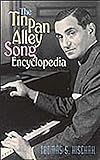 Thomas S. Hischak
The Tin Pan Alley Song Encyclopedia
Greenwood Press
Hardcover: 552 pages
(1 paragraph including the following types of information: Broadway productions, film productions, history and performers.)
|
|
|
|
|
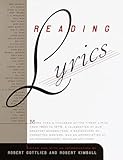 Robert Gottlieb, Robert Kimball
Reading Lyrics
Pantheon
Hardcover: 736 pages
(Includes the following types of information: song lyrics.)
|
|
|
|
|
“After You've Gone” was included in these films:
-
For Me And My Gal
(1942, Judy Garland)
- Jolson Sings Again (1949,
Larry Parks dubbed by Al Jolson)
- Some Came Running (1958, Shirley
MacLaine)
|
|
|
|
Comment Policy
- Your comments are welcome, including why you like
this tune, any musical challenges it presents, or additional background information.
- Jazz musicians, fans, and students of all ages use this website as an educational resource.
As such, off-topic, off-color, unduly negative, and patently promotional comments will be removed.
- Once submitted, all comments become property of JazzStandards.com.
By posting, you give JazzStandards.com permission to republish or otherwise distribute your comments in any format or other medium.
JazzStandards.com reserves the right to edit or remove any comments at its sole discretion.
|
|
| Click on any CD for more details at Amazon.com |
 Bessie Smith
The Essential Bessie Smith
Date Sony 64922
Original recording 1927
|
|
Smith offers a classic early interpretation of this song. The sound, not surprisingly, is deep and bluesy, with accompaniment by some of her most sensitive collaborators, including clarinetist Buster Bailey, trombonist Jimmy Harrison, cornetist Joe Smith and pianist Fletcher Henderson.
|
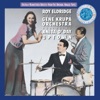
 Roy Eldridge, Anita O'Day with Gene Krupa's Orchestra
Uptown
Sony 45448
Original recording 1941
|
|
Drummer Krupa is the bandleader here, but the focus is on the trumpet of Roy Eldridge. The arrangement revolves around the powerful playing that made “Little Jazz” such a dominant influence on subsequent players like Dizzy Gillespie.
|
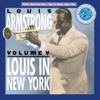
 Louis Armstrong
Louis Armstrong Collection, Vol. 5: Louis in New York
1990 Sony 46148
Original recording 1929
|
|
This album includes three takes of Armstrong’s classic rendition of “After You’ve Gone,” featuring his own New York-based larger ensemble of the late 1920s. For added contrast, one take features his singing in addition to his trumpet playing, while the other two takes are instrumental.
|
 Charlie Parker
Ultimate Charlie Parker
1999 Polygram 559708
Original recording 1946
|
|
This up-tempo live recording from 1946 features Charlie Parker flanked by an all-star cast and doing what he does best, playing endlessly creative and nimble lines at a bright tempo.
|
|
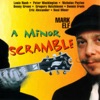
 Mark Elf
A Minor Scramble
1997, Jen Bay Jazz #3
|
|
Guitarist Elf is featured here in a variety of settings with several fine jazz musicians. The clarity of his playing is showcased on “After You’ve Gone”’ against the backdrop provided by Peter Washington (b) and Louis Nash (d).
|
 Nicholas Payton
Gumbo Nouveau
Polygram Records
Original recording 1996
|
|
Trumpeter Payton has taken some of the chestnuts associated with New Orleans and updated them. “After You’ve Gone” is refreshed with modern harmonies by his young and forward-looking sextet.
|
 Shirley Horn
Loads of Love & Shirley With Horns
Polygram Records
Original Recording 1963
|
|
Horn was famous for slowing things down. Here, in contrast to the bluesy or uptempo interpretations of most singers, she takes “After You’ve Gone” sweetly as a slow ballad--probably the only singer who could do so and make it convincing.
|
|
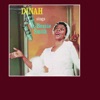
 Dinah Washington
Sings Bessie Smith
1999, Polygram Records
Original recording, 1958
|
|
A supremely bluesy interpretation by jazz singer Dinah Washington. When she threatens with “You’ll miss the dearest pal you ever had,”’ you can’t help but believe it.
|
 Sonny Criss
Complete Imperial Sessions
2000, Blue Note 24564
Original recording, 1956
|
|
The pace is dizzying as alto saxophonist Sonny Criss chews up the scenery on this bebop version of the song.
|
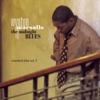
 Wynton Marsalis
Standard Time Vol.5: The Midnight Blues
1998 Columbia 68921
Original recording 1998
|
|
Backed by strings on this track, Marsalis’ lyrical trumpet is hauntingly beautiful. He once again proves what a tactician he is without losing an ounce of emotion.
|
|
|
|